Pelvic Floor Squeeze When Lifting
Lifting raises the pressure inside the tummy, and that pressure pushes down on the bladder and pelvic floor. In Indian homes the loads are daily: a child on the hip, water buckets, a pressure cooker, grocery bags, a gas cylinder. Squeezing the pelvic floor and breathing out as you lift helps the pelvic floor hold against that push, which reduces leaking and the heavy, dragging feeling of a prolapse.
Written by Dr. V. B. Rajendra Prasad, MPT, licensed in the US and UK.
How to do it
- 1
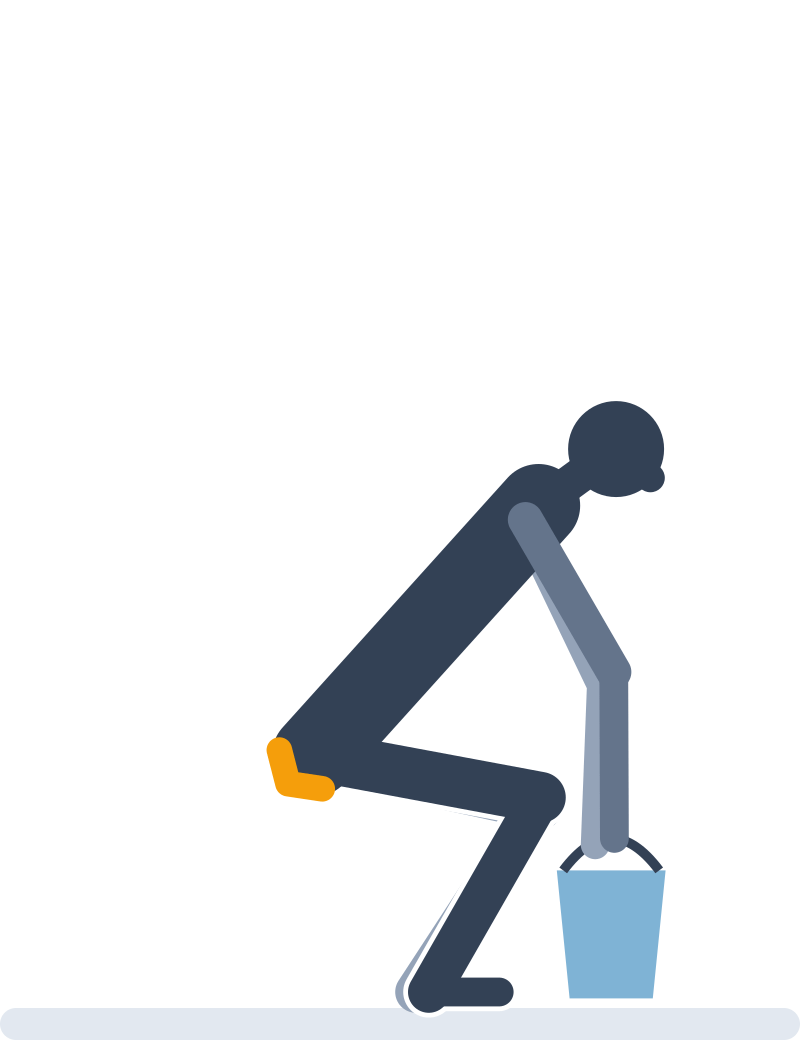
Stand close to the load with feet apart. Bend your knees and hips to get down to it, keeping your back long rather than bending from the waist.
- 2
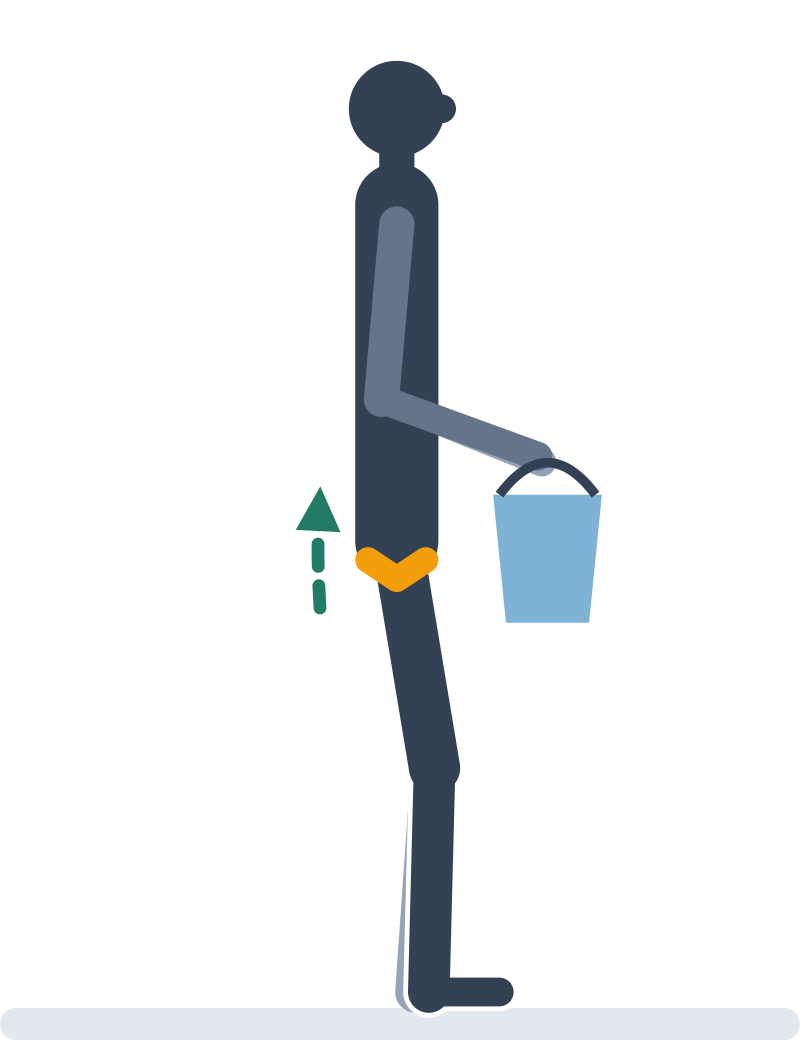
Before you lift, squeeze and lift your pelvic floor.
- 3
Breathe out as you lift, keeping the squeeze. Do not hold your breath.
- 4
Keep the load close to your body as you stand up, and keep breathing.
- 5
Put the load down the same way, squeezing as you lower, then let the pelvic floor relax.
How many
Practise with a light load such as a half-filled bucket, 5 to 10 times, once a day for a week or two. Then use it every time you lift through the day.
Common mistakes
Holding your breath and straining as you lift. This pushes down hard on the pelvic floor. Breathe out on the effort.
Squeezing only after the load is up. Squeeze first.
Lifting with the load far from your body, or twisting while lifting.
Carrying more than you need to. Split water into two smaller buckets and carry one in each hand, and ask for help with gas cylinders.
Pulling the tummy in hard instead of lifting the pelvic floor.
Make it easier
Start with light objects such as a bag of vegetables, or practise the movement with no load at all. Lift from a raised surface, such as a chair or step, instead of the floor.
Make it harder
Gradually lift heavier everyday loads, then use the same approach for squats and weights at the gym. Your physiotherapist will tell you when heavier lifting is safe for you.
Who it helps
When to stop and check
If lifting brings on heaviness, a dragging feeling, a bulge or leaking despite squeezing, lift less for now and get checked. After a caesarean, avoid lifting anything heavier than your baby for about 6 weeks unless your doctor advises otherwise. After prostate or pelvic surgery, follow your surgeon's lifting limits.
Are you doing it right? Book a form check
One live 1-hour video session with a Nuprana physiotherapist. You can ask for a female physiotherapist, and we will match that request.
- Observe: they watch how you sit, stand and breathe while you squeeze, and ask what you feel, so they can tell whether the right muscles are working.
- Correct: they coach you to lift without holding your breath or bearing down, and without squeezing your tummy, buttocks or thighs instead.
- Teach: you finish knowing how long to hold, how many to do, and when to move on to the next exercise in the plan.
Nothing to undress. You stay fully clothed, and the camera only needs to see your posture and breathing.
₹649, from home, anywhere in India. If you are in pain or recovering from surgery, the physiotherapist will tell you what else would help.
Book a form checkFrequently asked questions
Is it safe to lift with a prolapse?
Why breathe out when lifting?
Can I lift my baby after delivery?
Related
More pelvic floor exercises

Written by Dr. V. B. Rajendra Prasad, MPT. Licensed to practice in the US (NY state) and UK (HCPC).
20 years of clinical experience. About Dr. Rajendra