Pelvic Floor Relaxation (Down-Training)
Not every pelvic floor problem is weakness. Some people have pelvic floor muscles that are held tight all the time, often without knowing it. This can cause pelvic pain, pain during sex, a slow or stop-start urine stream, difficulty emptying the bowel, and even leaking, because a muscle that never rests cannot squeeze well. Down-training teaches the muscles to let go, using slow breathing.
Written by Dr. V. B. Rajendra Prasad, MPT, licensed in the US and UK.
How to do it
- 1
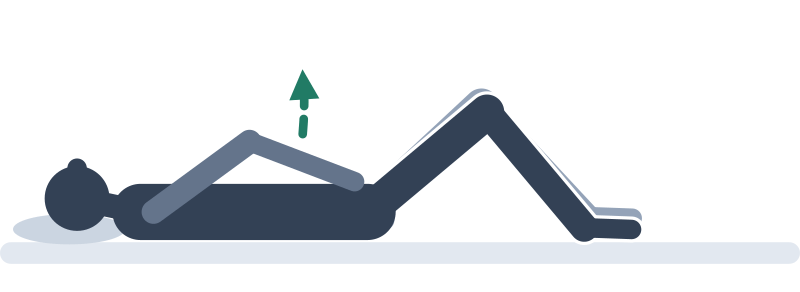
Lie on your back with your knees bent and a pillow under your head. You can let your knees fall apart onto pillows if that is comfortable. Put one hand on your tummy.
- 2
Breathe in slowly through your nose, letting your tummy rise under your hand and your lower ribs widen. Do not force it.
- 3
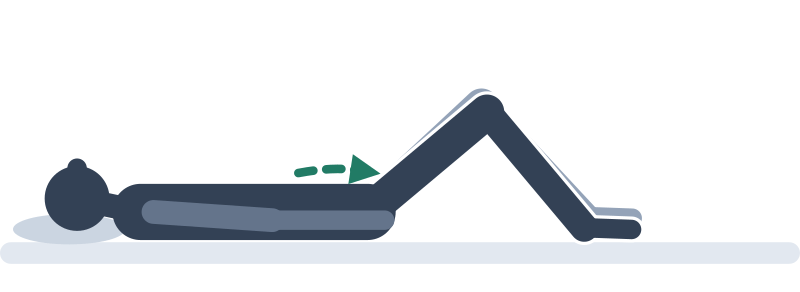
As you breathe in, imagine the pelvic floor softening and dropping, like a flower opening or the feeling as you start to pass urine.
- 4
Breathe out slowly through your mouth, and let the pelvic floor stay soft. Do not push or bear down.
- 5
Unclench your jaw, let your shoulders drop and soften your buttocks and thighs. Continue for a few minutes.
How many
5 to 10 minutes, once or twice a day, and briefly before passing urine or stool. If you are also doing squeezes, always finish each one with a full relaxation.
Common mistakes
Pushing or straining to "relax". Down-training is a letting go, not a push.
Breathing fast or high in the chest. Breathe slowly, into the tummy and lower ribs.
Doing lots of strengthening squeezes when the muscles are already tight. This can make pain worse. Get assessed first.
Expecting it to work in one session. Muscles that have been tight for months take weeks of practice to let go.
Make it easier
Start in whichever position feels most relaxing: lying on your side with a pillow between your knees, or in child's pose with your knees apart and forehead resting on a pillow. Warmth over the lower tummy can help.
Make it harder
Practise letting go while sitting, especially on the toilet with your feet raised on a small stool, and when standing. Your physiotherapist may add gentle stretches for the hips and inner thighs.
Who it helps
When to stop and check
Pelvic pain needs a proper assessment, so see a doctor or physiotherapist before relying on exercises. See a doctor promptly for pain with fever, unusual discharge or bleeding, blood in the urine, being unable to pass urine, or new pain after menopause. If you are not sure whether your pelvic floor is weak or tight, ask a physiotherapist before starting strengthening.
Are you doing it right? Book a form check
One live 1-hour video session with a Nuprana physiotherapist. You can ask for a female physiotherapist, and we will match that request.
- Observe: they watch how you sit, stand and breathe while you squeeze, and ask what you feel, so they can tell whether the right muscles are working.
- Correct: they coach you to lift without holding your breath or bearing down, and without squeezing your tummy, buttocks or thighs instead.
- Teach: you finish knowing how long to hold, how many to do, and when to move on to the next exercise in the plan.
Nothing to undress. You stay fully clothed, and the camera only needs to see your posture and breathing.
₹649, from home, anywhere in India. If you are in pain or recovering from surgery, the physiotherapist will tell you what else would help.
Book a form checkFrequently asked questions
How do I know if my pelvic floor is too tight?
Should I stop Kegels if my pelvic floor is tight?
Can men do pelvic floor relaxation?
Related
More pelvic floor exercises

Written by Dr. V. B. Rajendra Prasad, MPT. Licensed to practice in the US (NY state) and UK (HCPC).
20 years of clinical experience. About Dr. Rajendra