Pelvic Floor Squeeze (Kegel)
The pelvic floor is a sling of muscles at the base of the pelvis that supports the bladder, bowel and womb and helps control leakage. It can weaken after pregnancy and childbirth, with age and after menopause. A pelvic floor squeeze, timed with your breathing, retrains these muscles. Lying down is the easiest position to learn it in.
Written by Dr. V. B. Rajendra Prasad, MPT, licensed in the US and UK.
How to do it
- 1
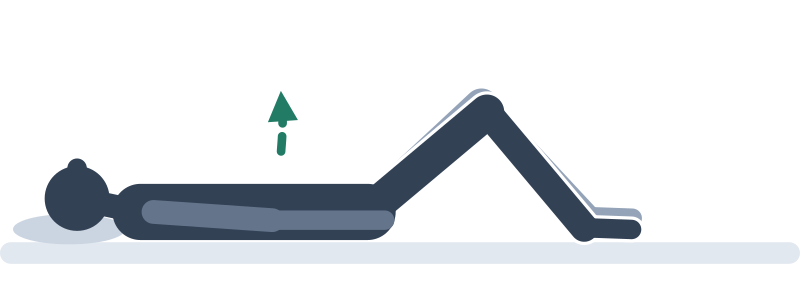
Lie on your back with your knees bent and feet flat, a pillow under your head. Let your tummy, buttocks and thighs relax.
- 2
Breathe in slowly and let your tummy rise and your pelvic floor relax.
- 3
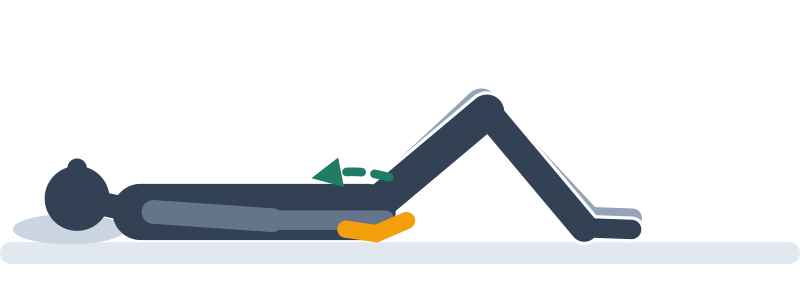
As you breathe out, gently squeeze and lift the muscles you would use to stop passing wind and to stop the flow of urine, as if drawing them up and in.
- 4
Hold the squeeze while breathing normally. Keep the buttocks, thighs and tummy soft.
- 5
Let go fully and rest for as long as you held. The full relaxation matters as much as the squeeze.
How many
Long holds: up to 10 squeezes, holding each for up to 10 seconds, with a rest of the same length between. Then 10 quick squeezes, lifting and letting go. Do this 3 times a day. Start with what you can manage, even 3 seconds, and build up.
Common mistakes
Squeezing the buttocks, thighs or tummy instead. Only the pelvic floor should work.
Holding your breath or bearing down. Breathe out as you lift. Pushing down is the opposite movement.
Not relaxing fully between squeezes. A pelvic floor that never lets go can cause problems too.
Practising by stopping urine on the toilet regularly. It is fine once to find the muscles, but not as an exercise.
Giving up early. It takes around 3 months of regular practice to see the full benefit.
Make it easier
Hold for 2 to 3 seconds only, and do fewer repetitions. Lying on your side can also make the muscles easier to feel.
Make it harder
Do the squeezes sitting, then standing, then during everyday activities. The next steps are quick squeezes, long holds sitting and standing, squeezing just before you cough or sneeze ("the knack") and squeezing as you lift. Our 12-week pelvic floor plan puts them in order.
Who it helps
When to stop and check
If you cannot feel the muscles working, have pain during the exercise or sex, feel a heaviness or bulge, or leakage is not improving after about 3 months, see a women's health physiotherapist or your doctor. After childbirth, gentle squeezes can usually start within days, but after a difficult birth, stitches or a caesarean, check with your doctor or physiotherapist first.
Are you doing it right? Book a form check
One live 1-hour video session with a Nuprana physiotherapist. You can ask for a female physiotherapist, and we will match that request.
- Observe: they watch how you sit, stand and breathe while you squeeze, and ask what you feel, so they can tell whether the right muscles are working.
- Correct: they coach you to lift without holding your breath or bearing down, and without squeezing your tummy, buttocks or thighs instead.
- Teach: you finish knowing how long to hold, how many to do, and when to move on to the next exercise in the plan.
Nothing to undress. You stay fully clothed, and the camera only needs to see your posture and breathing.
₹649, from home, anywhere in India. If you are in pain or recovering from surgery, the physiotherapist will tell you what else would help.
Book a form checkFrequently asked questions
How do I know I am squeezing the right muscles?
How long do pelvic floor exercises take to work?
Can I do Kegels during pregnancy?
Related
More pelvic floor exercises

Written by Dr. V. B. Rajendra Prasad, MPT. Licensed to practice in the US (NY state) and UK (HCPC).
20 years of clinical experience. About Dr. Rajendra