Thoracic Extension Over a Chair
The upper back (thoracic spine) stiffens into a rounded position after long hours of sitting, studying or riding a two-wheeler. When it cannot straighten, the neck and lower back have to make up the difference. This exercise uses the back of an ordinary chair to gently arch the upper back the other way.
Written by Dr. V. B. Rajendra Prasad, MPT, licensed in the US and UK.
How to do it
- 1
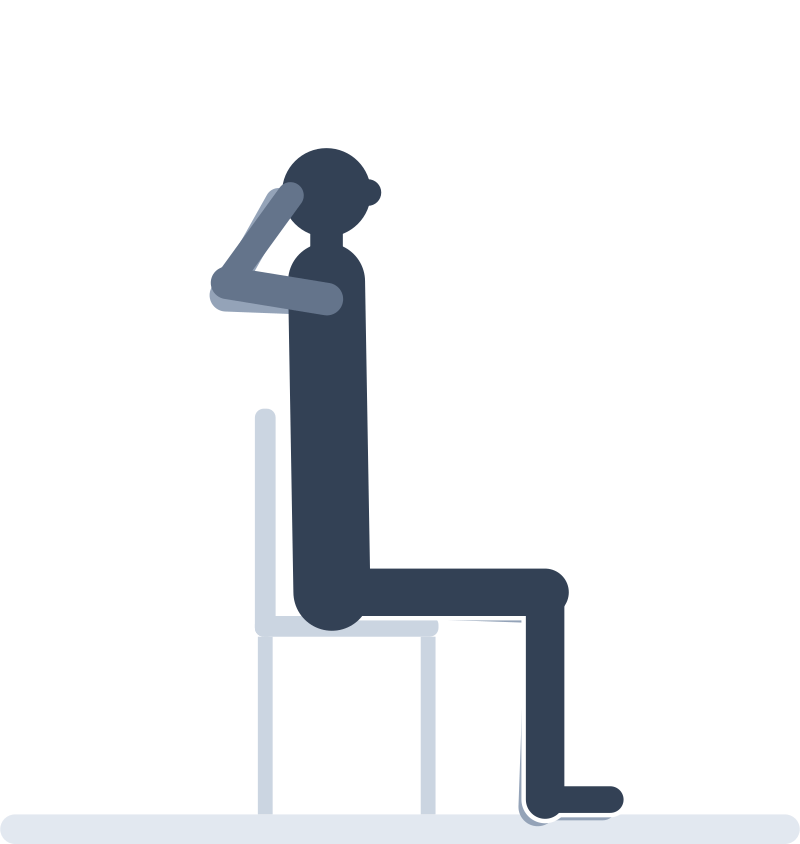
Sit on a firm chair with a backrest that comes up to around the middle of your back. A chair without wheels is safest.
- 2
Sit back so your back touches the backrest. Feet flat on the floor.
- 3
Clasp your hands lightly behind your head to support your neck, elbows pointing forwards.
- 4
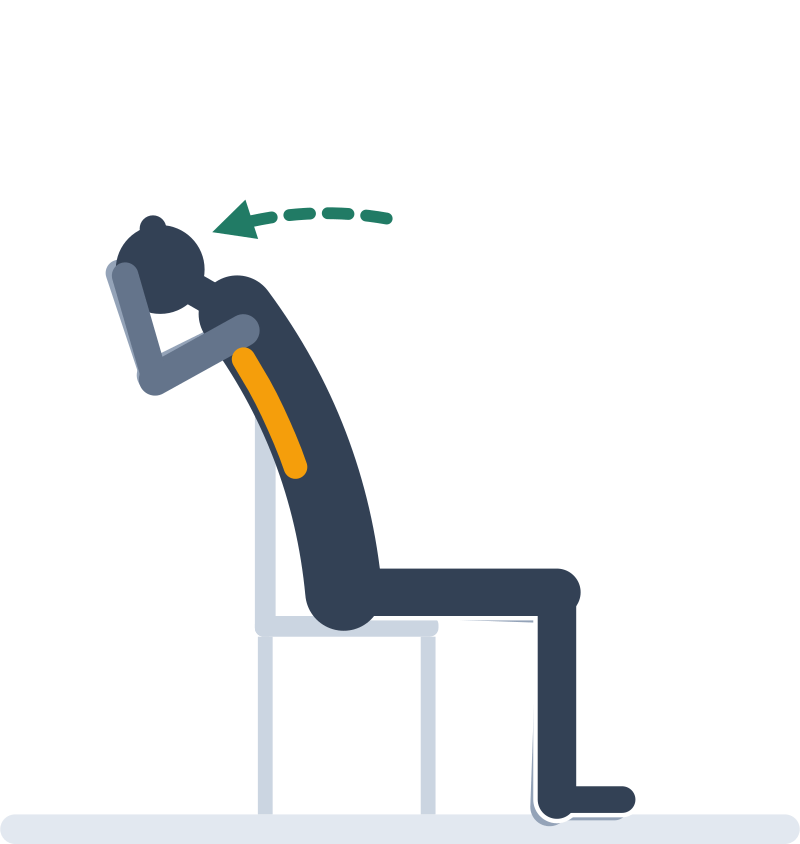
Breathe out and slowly arch your upper back over the top of the backrest, letting your gaze rise towards the ceiling. Keep your lower back and hips still.
- 5
Hold for 2 to 3 seconds, then come back up to sitting tall.
How many
8 to 10 slow repetitions, 1 to 2 times a day. It also works well as a break every hour or two during desk work.
Common mistakes
Bending from the lower back. Keep the buttocks on the seat and let the movement come from the upper back.
Pulling on the head with the hands. The hands only support the neck.
Throwing the head back. Let the head follow the upper back.
Going too far. A small, comfortable range is enough.
Make it easier
Cross your arms over your chest instead of putting your hands behind your head, and arch back only a little.
Make it harder
Lie on the floor on your back with a rolled towel placed across the upper back, under the shoulder blades, hands behind your head, and gently let your upper back extend over the roll. Move the roll a little higher or lower to work different levels.
Who it helps
When to stop and check
Avoid this exercise, or ask first, if you have osteoporosis with a past spinal fracture, or if leaning back brings on dizziness or pain, numbness or tingling in the arms. Stop if you feel sharp pain in the back or neck. Use a stable chair that cannot tip backwards.
Are you doing it right? Book a form check
One live 1-hour video session with a Nuprana physiotherapist, for this exercise and any others you have been given.
- Observe: they watch you do each exercise, from the angles that matter.
- Correct: they fix your position, range and speed as you go, so the right muscles do the work.
- Teach: you finish knowing how many to do, how it should feel, and when to make it harder.
₹649, from home, anywhere in India. If you are in pain or recovering from surgery, the physiotherapist will tell you what else would help.
Book a form checkFrequently asked questions
Why does a stiff upper back cause neck pain?
Can I do this at my desk?
Is it normal to hear a click?
Related
More back exercises

Written by Dr. V. B. Rajendra Prasad, MPT. Licensed to practice in the US (NY state) and UK (HCPC).
20 years of clinical experience. About Dr. Rajendra