Lying Back Extension
The muscles along the spine hold you upright. As they weaken with age, the upper back can round forward, and with osteoporosis a rounded posture puts more strain on the bones of the spine. A gentle lying back extension, lifting the head and shoulders just a little, strengthens these muscles. Back extension exercises are a standard part of exercise for osteoporosis, while forward-bending exercises such as sit-ups are best avoided.
Written by Dr. V. B. Rajendra Prasad, MPT, licensed in the US and UK.
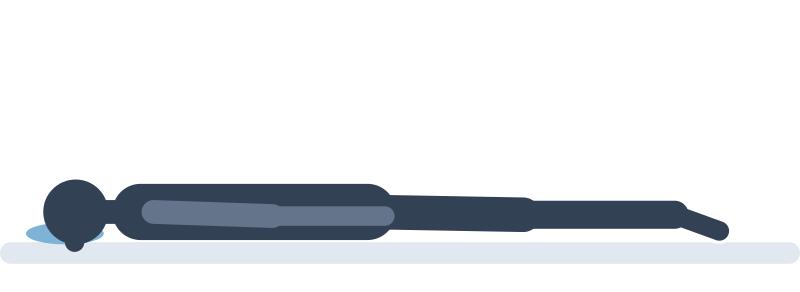
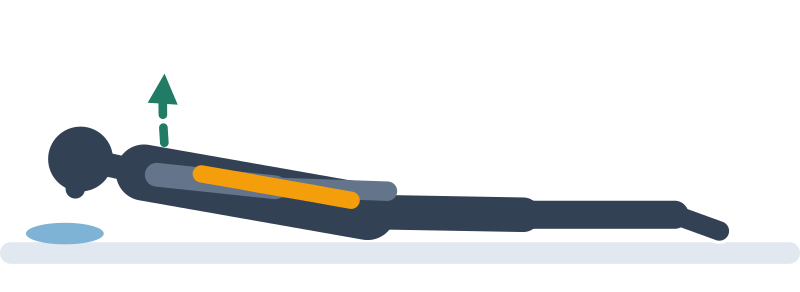
How to do it
- 1
Lie face down on a mat or firm bed, with a folded towel under your forehead. Put a pillow under your tummy if that is more comfortable. Rest your arms by your sides, palms up.
- 2
Gently draw your shoulder blades back and down, and tuck your chin slightly so the back of your neck is long.
- 3
Breathe out and lift your head and shoulders a few centimetres off the floor, keeping your eyes on the floor.
- 4
Hold for 3 to 5 seconds, breathing normally.
- 5
Lower slowly and rest for a few seconds. Repeat.
How many
5 to 10 lifts, on most days. Build up the hold to 10 seconds. A small lift done well is enough.
Common mistakes
Lifting too high and arching hard. The lift is small; this is not a cobra stretch.
Looking up and tipping the head back. Keep the chin tucked and the eyes on the floor.
Pushing up with the hands. The back muscles do the lifting.
Holding your breath.
Lifting the legs as well before you are ready. Start with the upper body only.
Make it easier
Lift only the head, and draw the shoulder blades back, without lifting the chest. If you cannot lie on your front, sit tall on a chair, draw your shoulder blades back and press gently back into the chair for 5 seconds.
Make it harder
Hold for longer, or lift your arms just off the floor beside you as you lift. Your physiotherapist may add standing back exercises and the band row.
Who it helps
When to stop and check
If you have had a fracture of the spine, have sudden severe back pain, or your doctor has said your fracture risk is very high, ask a physiotherapist before starting. Stop if it causes pain in the back or neck, or pain, numbness or tingling down a leg. Lying on your front is not suitable in pregnancy or soon after breast or tummy surgery. With osteoporosis, avoid sit-ups, toe touches and bending forward with a weight.
Are you doing it right? Book a form check
One live 1-hour video session with a Nuprana physiotherapist, for this exercise and any others you have been given. You can ask for a female physiotherapist, and we will match that request.
- Observe: they watch you do each exercise, from the angles that matter.
- Correct: they fix your position, range and speed as you go, so the right muscles do the work.
- Teach: you finish knowing how many to do, how it should feel, and when to make it harder.
Nothing to undress. Wear comfortable clothes you can move in; the camera only needs to see how you move.
₹649, from home, anywhere in India. If you are in pain or recovering from surgery, the physiotherapist will tell you what else would help.
Book a form checkFrequently asked questions
Is back extension safe with osteoporosis?
Which exercises should I avoid with osteoporosis?
Can this exercise fix a rounded back?
Related
More back exercises

Written by Dr. V. B. Rajendra Prasad, MPT. Licensed to practice in the US (NY state) and UK (HCPC).
20 years of clinical experience. About Dr. Rajendra