Hip Hinge
The hip hinge teaches you to bend forward from the hips while the back holds one steady position. It is the movement behind safe lifting, whether that is a bucket of water, a child or a deadlift at the gym. A stick held along the back tells you straight away if the back is bending.
Written by Dr. V. B. Rajendra Prasad, MPT, licensed in the US and UK.
How to do it
- 1
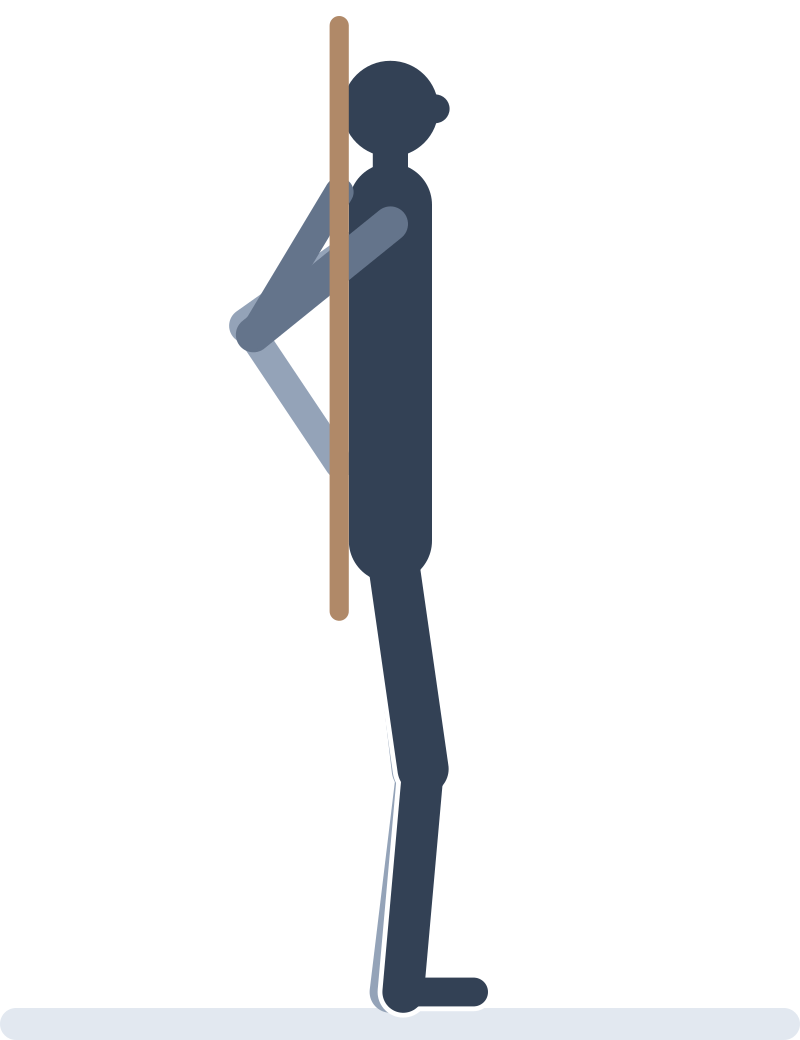
Stand with your feet hip-width apart. Hold a broomstick or pipe along your back, one hand behind your neck and the other at your lower back.
- 2
Adjust the stick so it touches three points: the back of your head, between your shoulder blades and your tailbone.
- 3
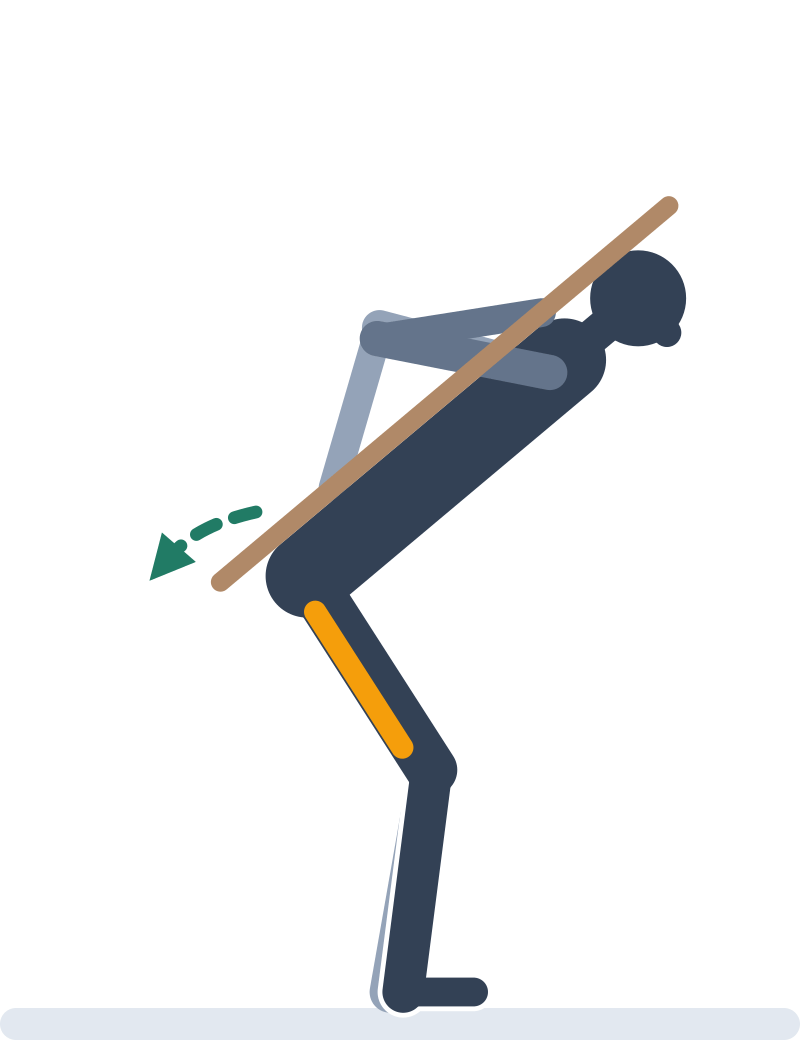
Soften your knees slightly. Push your hips back, as if closing a car door with your bottom, and let your chest tip forward.
- 4
Keep all three points touching the stick. Stop when you feel a stretch at the back of the thighs or the stick starts to come away.
- 5
Push your hips forward to stand up tall, squeezing your buttocks at the top.
How many
8 to 10 slow repetitions, 2 sets, once a day while you are learning. Then use the same movement whenever you bend to lift something heavy.
Common mistakes
Bending the knees so much that it becomes a squat. The knees bend a little, the hips move back.
Letting the head or tailbone come off the stick, which means the back is rounding or arching.
Going too low. Stop when the backs of the thighs feel tight.
Looking up. Keep the neck in line with the back.
Make it easier
Stand about a foot in front of a wall, facing away from it, and push your hips back until they touch the wall. Move further from the wall as you improve.
Make it harder
Do it without the stick, then holding a light weight close to the thighs. At the gym this becomes the Romanian deadlift, built up gradually.
Who it helps
When to stop and check
Stop if bending causes sharp back pain or pain going down the leg. If you have had spine surgery recently or have osteoporosis, ask your physiotherapist how far to bend and how much to lift.
Are you doing it right? Book a form check
One live 1-hour video session with a Nuprana physiotherapist, for this exercise and any others you have been given.
- Observe: they watch you do each exercise, from the angles that matter.
- Correct: they fix your position, range and speed as you go, so the right muscles do the work.
- Teach: you finish knowing how many to do, how it should feel, and when to make it harder.
₹649, from home, anywhere in India. If you are in pain or recovering from surgery, the physiotherapist will tell you what else would help.
Book a form checkFrequently asked questions
Why learn the hip hinge?
Is it wrong to bend my back?
Related
More back exercises

Written by Dr. V. B. Rajendra Prasad, MPT. Licensed to practice in the US (NY state) and UK (HCPC).
20 years of clinical experience. About Dr. Rajendra