Sciatic Nerve Glide
In sciatica, the sciatic nerve becomes irritated and sensitive to being stretched. A nerve glide moves the nerve gently back and forth through its path, without pulling it tight, by straightening the knee while lifting the head, then bending the knee while lowering the head. Physiotherapists use it to calm a sensitive nerve and help leg pain settle.
Written by Dr. V. B. Rajendra Prasad, MPT, licensed in the US and UK.
How to do it
- 1
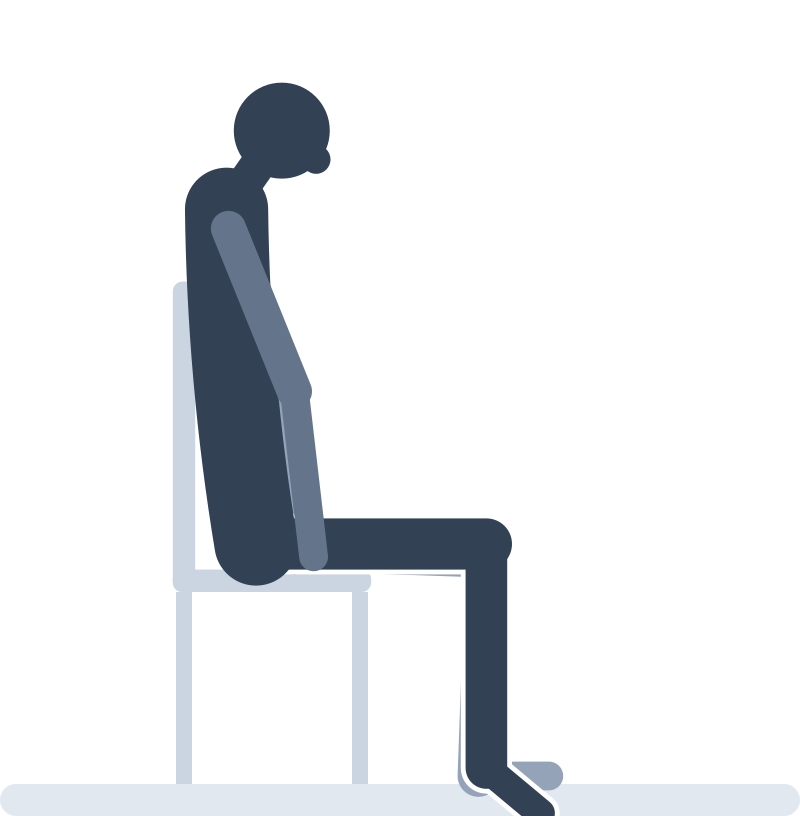
Sit tall on a firm chair, near the front of the seat, feet flat on the floor.
- 2
Start with the knee bent, the toes of the painful leg pointed away from you and your chin gently lowered to your chest.
- 3
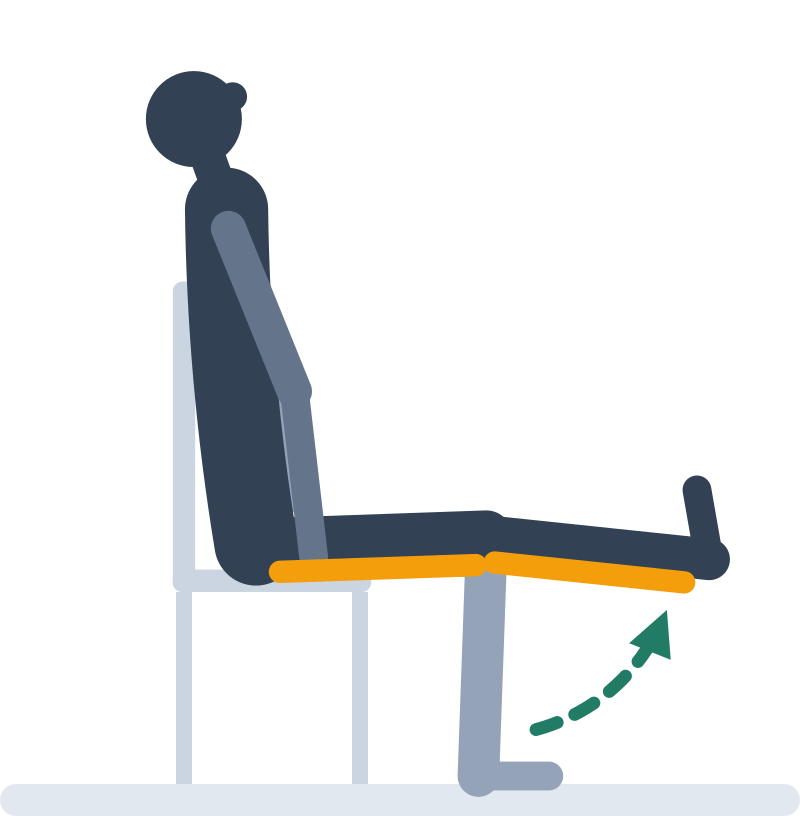
Now, in one smooth movement, straighten the knee, pull the toes up towards you and lift your head to look forward and slightly up.
- 4
Without holding, go straight back to the start: bend the knee, point the toes and lower the chin.
- 5
Keep moving smoothly back and forth. Stop each straightening before the leg pain or tingling starts.
How many
10 slow glides, 2 to 3 times a day. Start with fewer if your leg is very sensitive.
Common mistakes
Straightening the knee with the chin down. Lifting the head as the knee straightens is what keeps the nerve from being pulled tight.
Holding at the end like a stretch. This is a movement, not a hold.
Pushing into pain or tingling. The aim is to stay just short of symptoms.
Slumping heavily. Sit tall so only the head and leg move.
Make it easier
Make the movement smaller, straightening the knee only part of the way, or move only the ankle and head.
Make it harder
Your physiotherapist may progress you to a gentle tensioner, where the knee straightens with the chin down, or to doing the glide lying on your back. These load the nerve more and are best started under guidance.
Who it helps
When to stop and check
Leg pain or tingling may come on briefly during the glide but should settle within a minute of stopping. If it lingers or worsens, do fewer and smaller glides and tell your physiotherapist. Seek urgent medical help if you notice numbness around the genitals or back passage, new difficulty passing urine or controlling your bowels, or weakness in the leg or foot.
Are you doing it right? Book a form check
One live 1-hour video session with a Nuprana physiotherapist, for this exercise and any others you have been given.
- Observe: they watch you do each exercise, from the angles that matter.
- Correct: they fix your position, range and speed as you go, so the right muscles do the work.
- Teach: you finish knowing how many to do, how it should feel, and when to make it harder.
₹649, from home, anywhere in India. If you are in pain or recovering from surgery, the physiotherapist will tell you what else would help.
Book a form checkFrequently asked questions
What is the difference between a nerve glide and a hamstring stretch?
Should sciatic nerve glides hurt?
How long before nerve glides help sciatica?
Related
More back exercises

Written by Dr. V. B. Rajendra Prasad, MPT. Licensed to practice in the US (NY state) and UK (HCPC).
20 years of clinical experience. About Dr. Rajendra