Doorway Chest Stretch
Hours at a laptop or phone pull the shoulders forward and tighten the chest muscles. The doorway chest stretch opens the front of the chest and shoulders using nothing more than a door frame. Physiotherapists often pair it with strengthening exercises for the upper back, such as the shoulder blade squeeze, for neck and shoulder pain from desk work.
Written by Dr. V. B. Rajendra Prasad, MPT, licensed in the US and UK.
How to do it
- 1
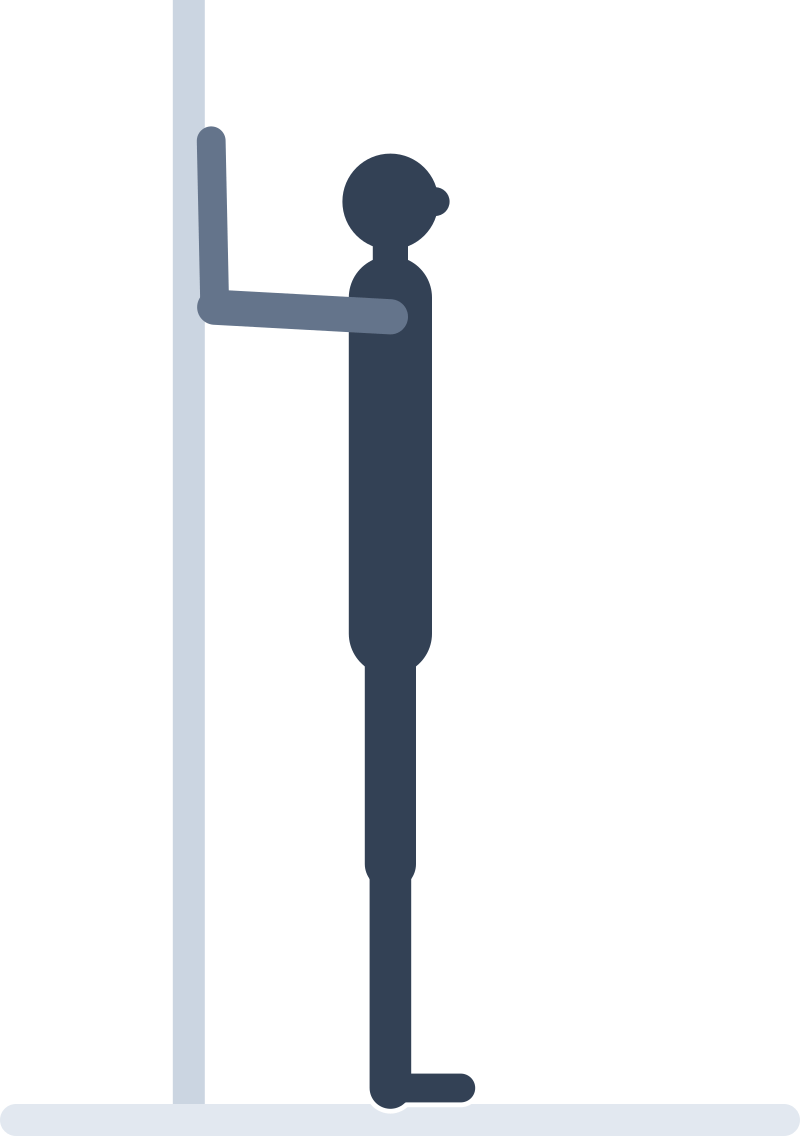
Stand in an open doorway. Raise one arm out to the side so the elbow is at shoulder height and bent to a right angle.
- 2
Rest the forearm and palm flat against the door frame.
- 3
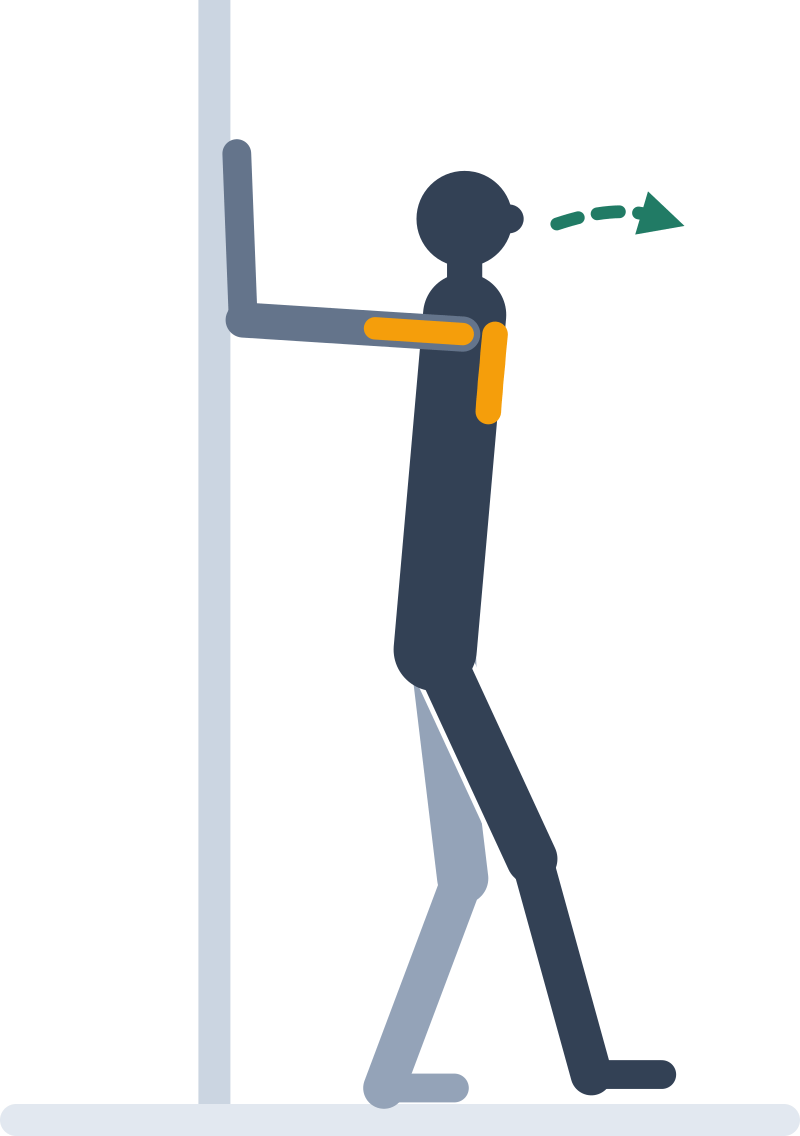
Step forward with the foot on the same side and stand tall, tummy gently tightened.
- 4
Lean your body slowly forward through the doorway until you feel a gentle stretch across the front of the chest and shoulder.
- 5
Hold, breathing slowly, then step back to release. Repeat on the other side.
How many
Hold for 20 to 30 seconds, 2 to 3 times on each side. Once or twice a day, and as a break during long spells of sitting.
Common mistakes
Leaning too far. A gentle stretch is enough. Pain at the front of the shoulder means ease off.
Letting the head poke forward. Keep the chin level and the head over the shoulders.
Arching the lower back to go further. Tighten the tummy and move the whole body as one.
Raising the elbow above shoulder height straight away. Start at shoulder height or a little lower.
Make it easier
Place the forearm lower on the frame, with the elbow below shoulder height, and lean only a little. You can also do one arm at a time against a wall corner.
Make it harder
Slide the forearm a little higher up the frame to stretch the lower chest fibres, or hold for up to 45 seconds. Add strengthening for the upper back, such as the shoulder blade squeeze and wall slide.
Who it helps
When to stop and check
Stop if you feel tingling or numbness down the arm, or sharp pain in the shoulder. Anyone who has had a shoulder dislocation, or is recovering from shoulder surgery, should ask their physiotherapist before doing this stretch, as it places the shoulder in a position that may need to be avoided for a while.
Are you doing it right? Book a form check
One live 1-hour video session with a Nuprana physiotherapist, for this exercise and any others you have been given.
- Observe: they watch you do each exercise, from the angles that matter.
- Correct: they fix your position, range and speed as you go, so the right muscles do the work.
- Teach: you finish knowing how many to do, how it should feel, and when to make it harder.
₹649, from home, anywhere in India. If you are in pain or recovering from surgery, the physiotherapist will tell you what else would help.
Book a form checkFrequently asked questions
Does the doorway stretch fix rounded shoulders?
Should I feel the stretch in my shoulder or my chest?
How often should desk workers do it?
Related
More neck and shoulder exercises

Written by Dr. V. B. Rajendra Prasad, MPT. Licensed to practice in the US (NY state) and UK (HCPC).
20 years of clinical experience. About Dr. Rajendra