Tandem Stance (Heel to Toe)
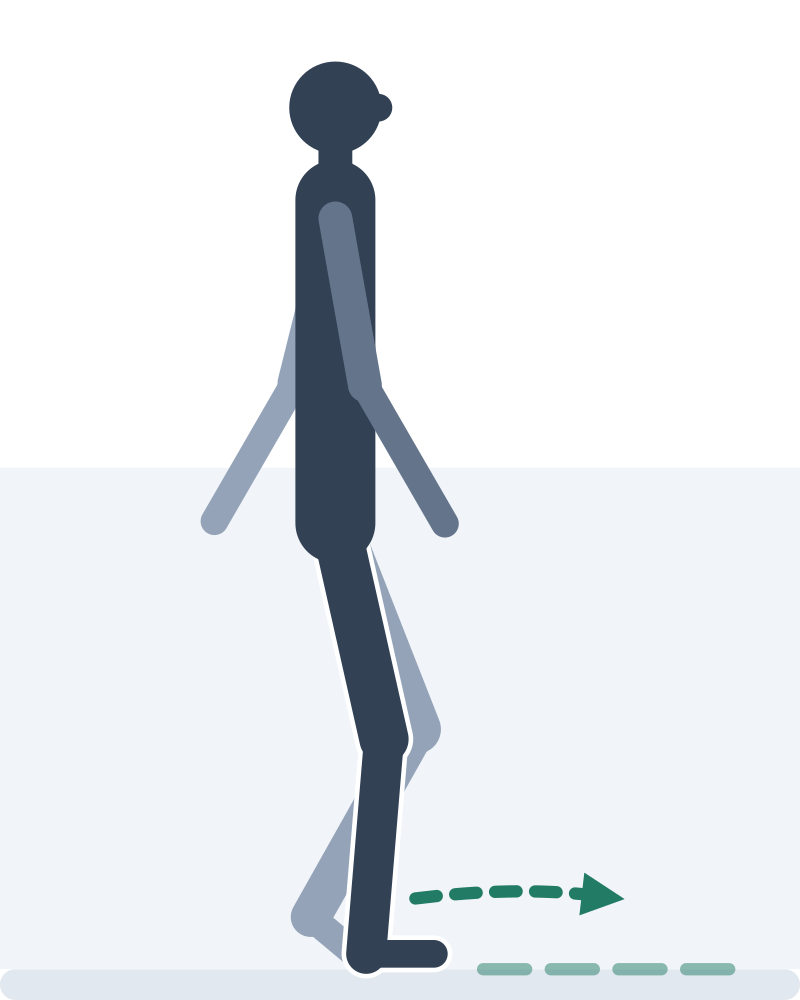
Tandem stance means standing with one foot directly in front of the other, heel touching toe, as if on a tightrope. It narrows your base so your balance has to work harder. Once standing is steady, walking heel to toe trains the same skill on the move. Both are standard parts of fall prevention programmes for older adults.
Written by Dr. V. B. Rajendra Prasad, MPT, licensed in the US and UK.

How to do it
- 1
Stand facing a kitchen counter or with a sturdy chair beside you, one hand resting lightly on it.
- 2
Place one foot directly in front of the other, so the heel of the front foot touches the toes of the back foot.
- 3
Stand tall, look straight ahead at a fixed point and hold.
- 4
When you can hold for 30 seconds with a light touch, try taking the hand off, keeping it close to the counter.
- 5
Swap which foot is in front and repeat. When the stance is easy, walk heel to toe along a wall or counter for 10 to 20 steps.
How many
Hold for up to 30 seconds, 3 times with each foot in front, once or twice a day. For the walk, 2 to 3 lengths of 10 to 20 steps.
Common mistakes
Looking down at the feet. Look ahead at a fixed point, which helps balance.
Gripping the counter tightly. A light fingertip touch lets your balance do the work.
Practising in the open. Always stay within reach of support.
Rushing the walk. Place each foot carefully, heel touching toe.
Make it easier
Start with the feet side by side and touching, then with one foot half a step in front (semi tandem), before moving to full tandem.
Make it harder
Hold without using your hands, turn your head slowly side to side, or close your eyes for a few seconds while someone stands beside you. Single leg balance is a further progression.
Who it helps
When to stop and check
Do this with someone nearby if you have fallen recently, feel dizzy or have been told you are at high risk of falls. Wear supportive footwear or bare feet on a non-slip floor. Stop and sit if you feel dizzy or faint, and mention it to your doctor or physiotherapist.
Are you doing it right? Book a form check
One live 1-hour video session with a Nuprana physiotherapist, for this exercise and any others you have been given.
- Observe: they watch you do each exercise, from the angles that matter.
- Correct: they fix your position, range and speed as you go, so the right muscles do the work.
- Teach: you finish knowing how many to do, how it should feel, and when to make it harder.
₹649, from home, anywhere in India. If you are in pain or recovering from surgery, the physiotherapist will tell you what else would help.
Book a form checkFrequently asked questions
How long should an older adult be able to hold tandem stance?
Is the heel to toe walk safe for my parent?
Why practise standing in such an unusual position?
Related
More ankle, calf and balance exercises

Written by Dr. V. B. Rajendra Prasad, MPT. Licensed to practice in the US (NY state) and UK (HCPC).
20 years of clinical experience. About Dr. Rajendra