Plantar Fascia Stretch
In plantar fasciitis, the thick band under the sole of the foot becomes painful where it joins the heel, and the first steps in the morning are often the worst. This stretch pulls the toes and foot back to lengthen the band under the foot. Done before getting out of bed, it can make those first steps much easier.
Written by Dr. V. B. Rajendra Prasad, MPT, licensed in the US and UK.
How to do it
- 1
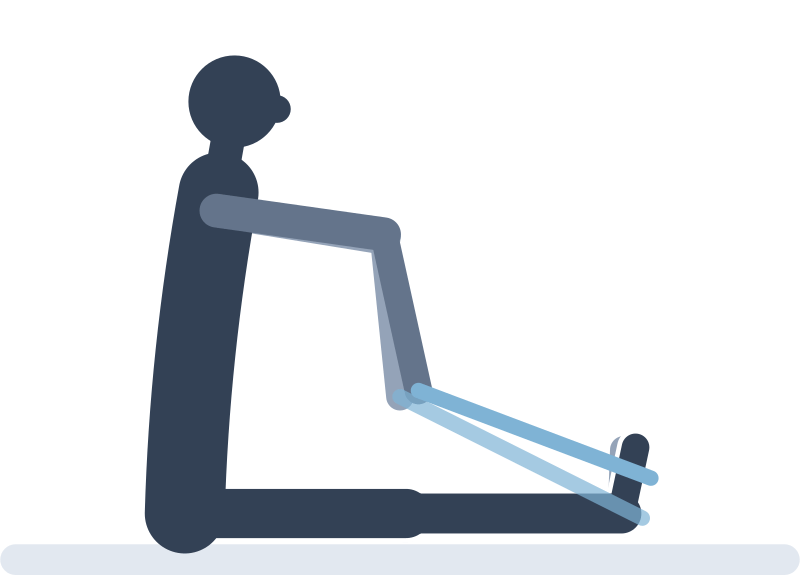
Sit on your bed or the floor with the painful leg straight out in front of you.
- 2
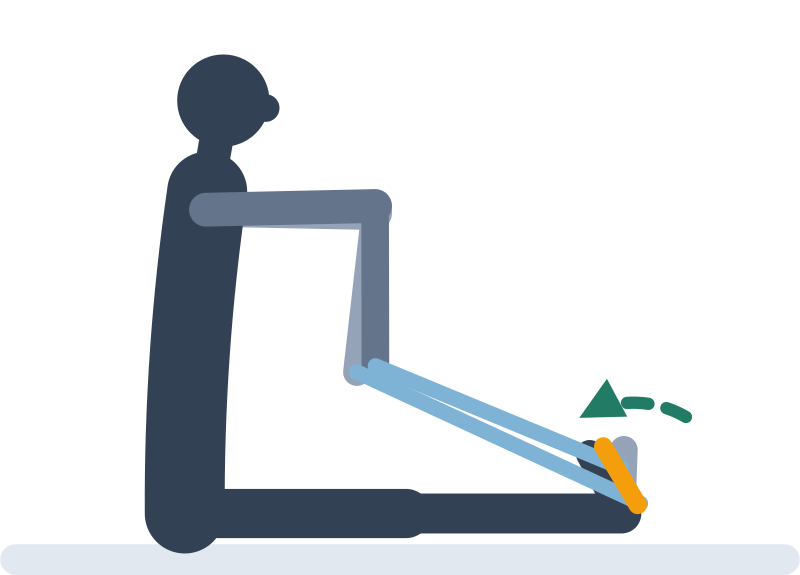
Loop a towel, dupatta or belt around the ball of the foot and toes, holding one end in each hand.
- 3
Gently pull the towel towards you so the toes and foot draw back. You should feel a stretch along the sole and often the calf.
- 4
Hold, keeping the knee straight and breathing normally.
- 5
Relax, then repeat. A seated version: cross the foot over the other knee and pull the toes back with your hand.
How many
Hold for 20 to 30 seconds, 3 times, before getting out of bed in the morning and before standing after long sitting. 2 to 3 times a day in total.
Common mistakes
Pulling only at the ankle. Make sure the towel also catches the toes, which is what stretches the sole.
Bending the knee. Keep it straight so the calf stretches too.
Walking barefoot on hard floors straight after. Put on supportive footwear for the first steps.
Stretching hard through sharp pain. A firm stretch is enough.
Make it easier
Do the seated version with the foot crossed over the other knee, pulling the toes back gently with your hand.
Make it harder
Add the calf stretch against a wall and heel raises. Rolling the sole over a cold water bottle for a few minutes can also ease pain. Your physiotherapist may add a heel raise done with the toes on a rolled towel, which loads the band directly.
Who it helps
When to stop and check
See a doctor or physiotherapist if heel pain follows an injury, the heel is swollen, red or warm, you have numbness or tingling in the foot, or the pain is present at night and at rest. People with diabetes should check their feet daily and get any new foot pain looked at early.
Are you doing it right? Book a form check
One live 1-hour video session with a Nuprana physiotherapist, for this exercise and any others you have been given.
- Observe: they watch you do each exercise, from the angles that matter.
- Correct: they fix your position, range and speed as you go, so the right muscles do the work.
- Teach: you finish knowing how many to do, how it should feel, and when to make it harder.
₹649, from home, anywhere in India. If you are in pain or recovering from surgery, the physiotherapist will tell you what else would help.
Book a form checkFrequently asked questions
Why is heel pain worse in the morning?
How long does plantar fasciitis take to heal?
Should I use a towel or my hand?
Related
More ankle, calf and balance exercises

Written by Dr. V. B. Rajendra Prasad, MPT. Licensed to practice in the US (NY state) and UK (HCPC).
20 years of clinical experience. About Dr. Rajendra