Wall Sit (Mini Squat)
The wall sit strengthens the thigh muscles while the wall supports your back, so you can focus on the knees without worrying about balance. Done as a shallow mini squat, it suits most painful knees. Held deeper, it builds the endurance needed for sport, treks and long days on your feet.
Written by Dr. V. B. Rajendra Prasad, MPT, licensed in the US and UK.
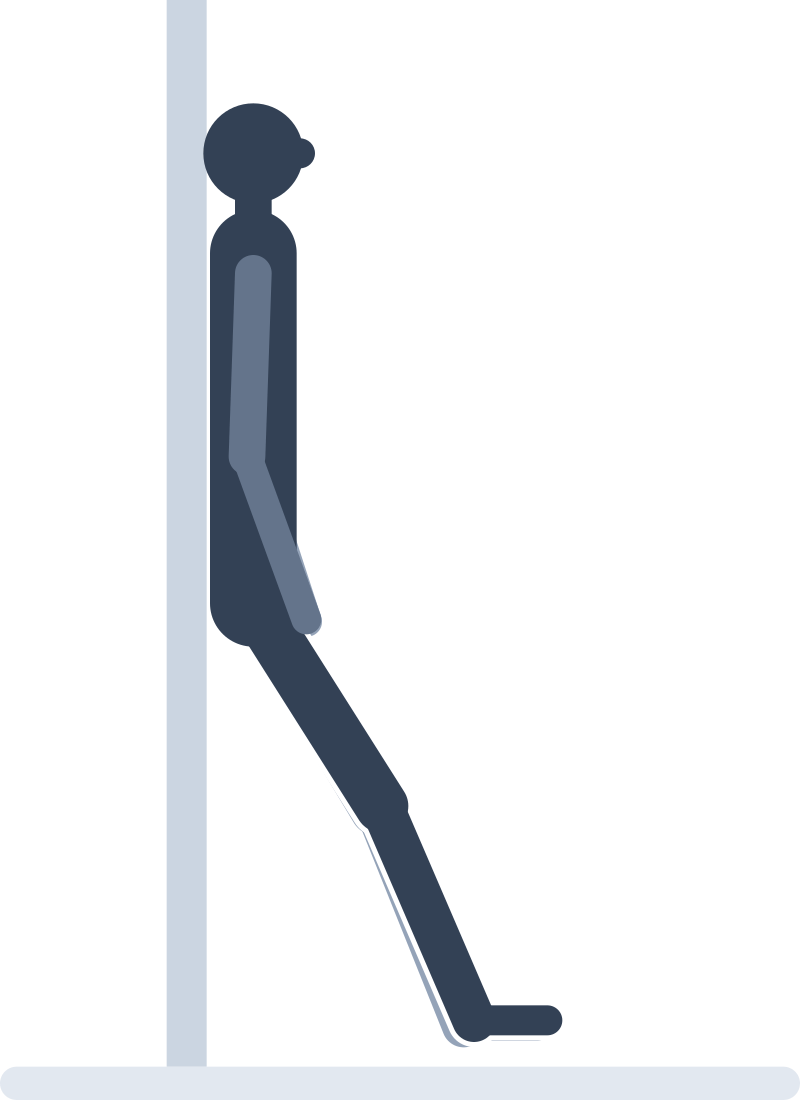
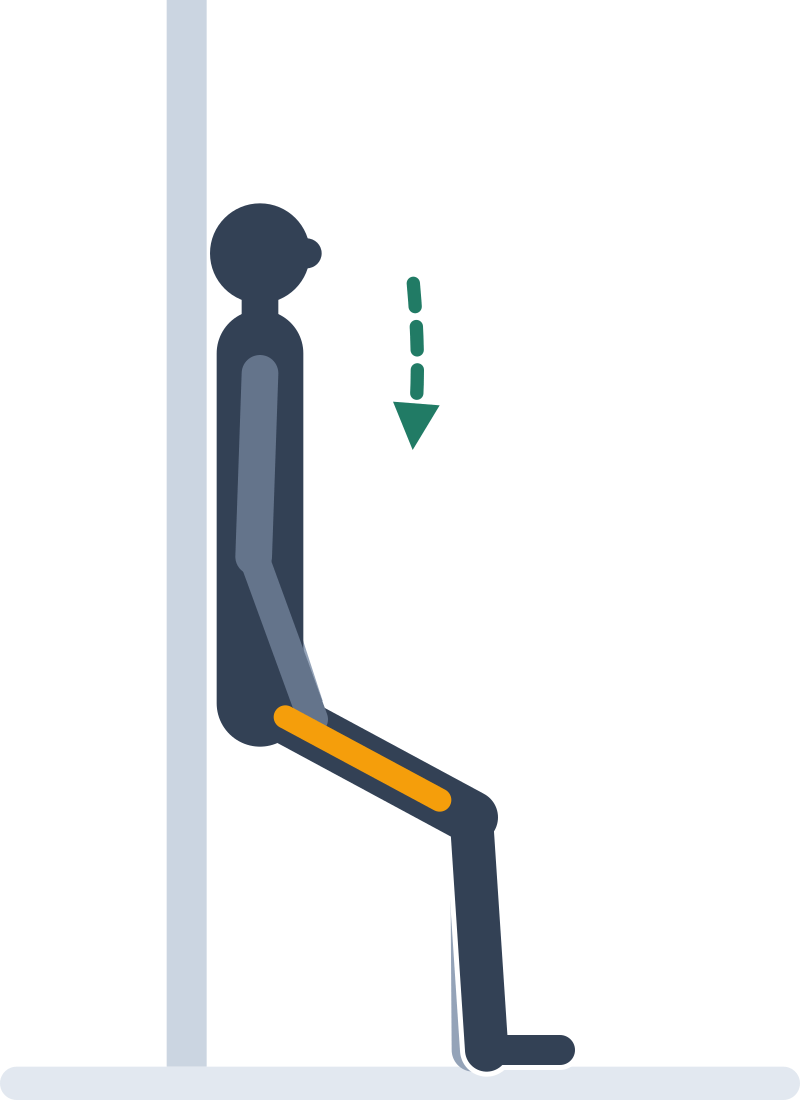
How to do it
- 1
Stand with your back flat against a wall and your feet hip-width apart, about one foot length away from the wall.
- 2
Slowly slide your back down the wall, bending the knees a little. For sore knees, a quarter of the way down is enough.
- 3
Check that your knees point the same way as your toes and stay behind or above your toes.
- 4
Hold the position, breathing normally, with your weight through your heels.
- 5
Slide back up to standing and rest.
How many
Hold for 10 to 20 seconds, 5 times, once a day. Build up to 30 to 45 seconds as it gets easier.
Common mistakes
Going too deep too soon. Thighs level with the floor is an advanced position. Start shallow.
Knees falling inwards. Keep them in line with your second toe.
Feet too close to the wall, which pushes the knees well past the toes.
Weight on the toes. Keep the heels pressed down.
Holding your breath.
Make it easier
Bend the knees only slightly, hold for 5 to 10 seconds, or do mini squats holding the back of a chair, moving up and down instead of holding.
Make it harder
Slide down further (not beyond thighs parallel to the floor), hold for longer, or lift one heel to put more weight through the other leg.
Who it helps
When to stop and check
Stop if you feel sharp pain under the kneecap, or if the knee swells afterwards, and stay in a shallower position next time. After ACL or knee surgery, ask your physiotherapist how deep you may go. If getting up from the position is hard, have a chair nearby to sit on.
Are you doing it right? Book a form check
One live 1-hour video session with a Nuprana physiotherapist, for this exercise and any others you have been given.
- Observe: they watch you do each exercise, from the angles that matter.
- Correct: they fix your position, range and speed as you go, so the right muscles do the work.
- Teach: you finish knowing how many to do, how it should feel, and when to make it harder.
₹649, from home, anywhere in India. If you are in pain or recovering from surgery, the physiotherapist will tell you what else would help.
Book a form checkFrequently asked questions
How deep should I go in a wall sit with knee pain?
Is a wall sit better than a squat?
How long should I hold a wall sit?
Related
More knee exercises

Written by Dr. V. B. Rajendra Prasad, MPT. Licensed to practice in the US (NY state) and UK (HCPC).
20 years of clinical experience. About Dr. Rajendra