Step-Ups
Step-ups train the exact movement you need for stairs, temple steps and getting on a bus. They strengthen the thigh and buttock muscles while you carry your own body weight. Physiotherapists use them for knee arthritis, in the later stages after knee replacement and ACL surgery, and for older adults who find stairs hard.
Written by Dr. V. B. Rajendra Prasad, MPT, licensed in the US and UK.
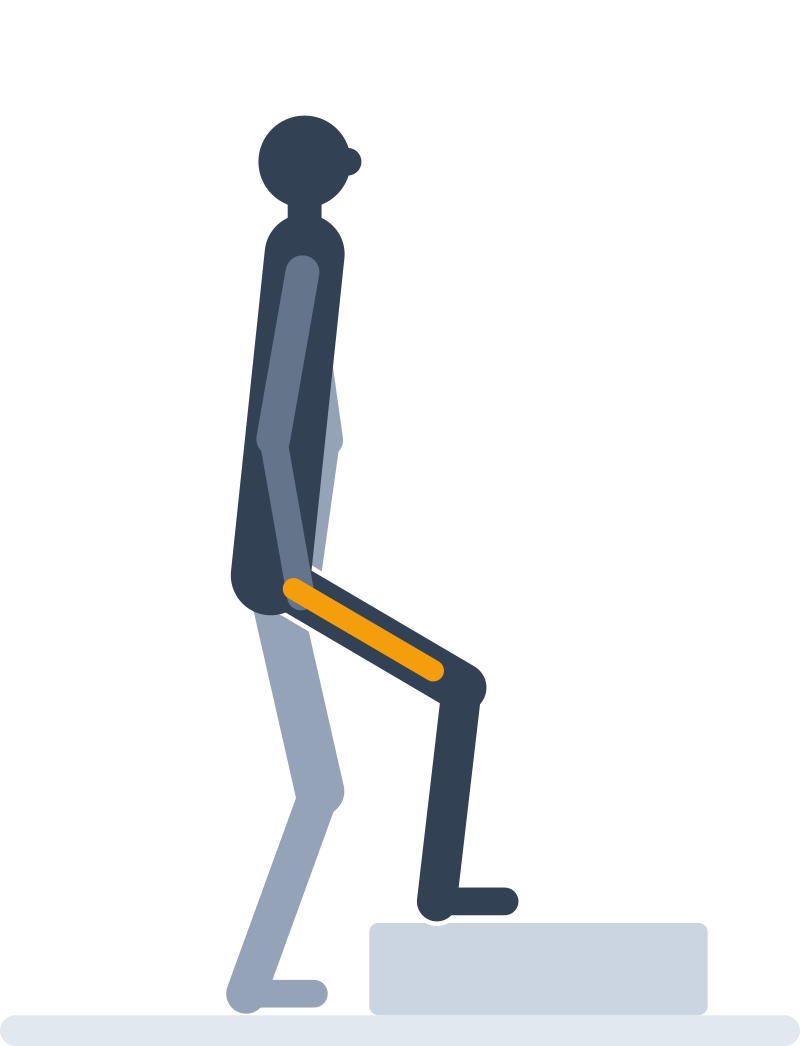
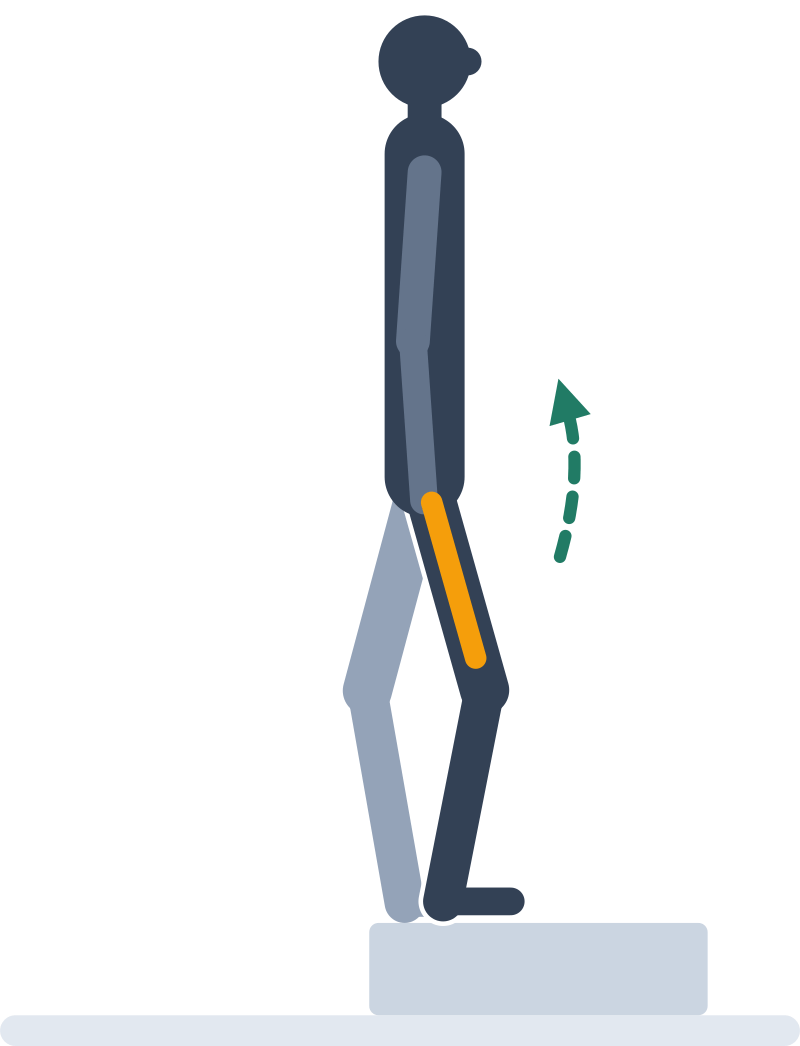
How to do it
- 1
Stand facing the bottom step of a staircase or a sturdy low step, with a rail or wall to hold.
- 2
Place the whole foot of one leg on the step.
- 3
Lean slightly forward and push through that heel to step up, straightening the knee and hip, until you stand on the step.
- 4
Bring the other foot up beside it, or simply touch it on the step.
- 5
Step down slowly with the foot that came up last, keeping the working knee in line with the toes.
How many
Start with 8 to 10 step-ups on each leg, 1 to 2 sets, once a day, on a step of 10 to 15 cm. Build up to 2 to 3 sets of 12 to 15.
Common mistakes
Pushing off with the back foot. Let the leg on the step do the work.
Letting the knee fall inwards. Keep it in line with the second toe.
Using a step that is too high. Start low. Height can come later.
Dropping down quickly. Lowering slowly builds strength and protects the knee.
Only part of the foot on the step. Place the whole foot, heel included.
Make it easier
Use a lower step (a thick book or a doorway threshold), and hold the rail with both hands. Sit to stand from a chair builds the same muscles if steps are not yet comfortable.
Make it harder
Use a higher step, slow down the lowering to 3 seconds, or hold a light bag of groceries in the opposite hand. Step-downs from the front of the step are a harder progression your physiotherapist may add.
Who it helps
When to stop and check
Always have something to hold if your balance is unsure. Knee pain that is sharp, or that is clearly worse the next morning, means the step is too high or the reps too many, so cut back. After knee surgery, start step-ups only when your physiotherapist says you are ready.
Are you doing it right? Book a form check
One live 1-hour video session with a Nuprana physiotherapist, for this exercise and any others you have been given.
- Observe: they watch you do each exercise, from the angles that matter.
- Correct: they fix your position, range and speed as you go, so the right muscles do the work.
- Teach: you finish knowing how many to do, how it should feel, and when to make it harder.
₹649, from home, anywhere in India. If you are in pain or recovering from surgery, the physiotherapist will tell you what else would help.
Book a form checkFrequently asked questions
Are step-ups good for knee arthritis?
How high should the step be?
Why does stepping down hurt more than stepping up?
Related
More knee exercises

Written by Dr. V. B. Rajendra Prasad, MPT. Licensed to practice in the US (NY state) and UK (HCPC).
20 years of clinical experience. About Dr. Rajendra