Wall Push-Up
A wall push-up works the chest, the shoulders and the backs of the arms, and puts some load through the arm and wrist bones, without getting down on the floor. Leaning on a wall takes most of your body weight off, so it suits beginners, older adults and women regaining strength after breast cancer treatment, and it is easy to make harder as you get stronger.
Written by Dr. V. B. Rajendra Prasad, MPT, licensed in the US and UK.
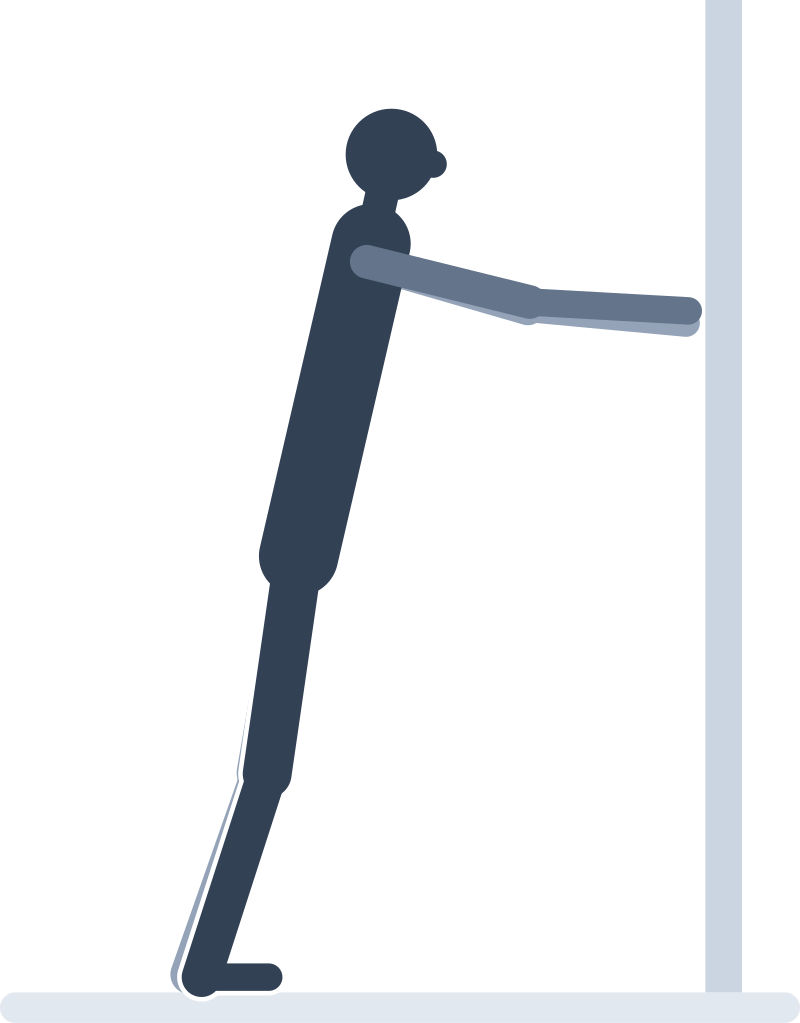
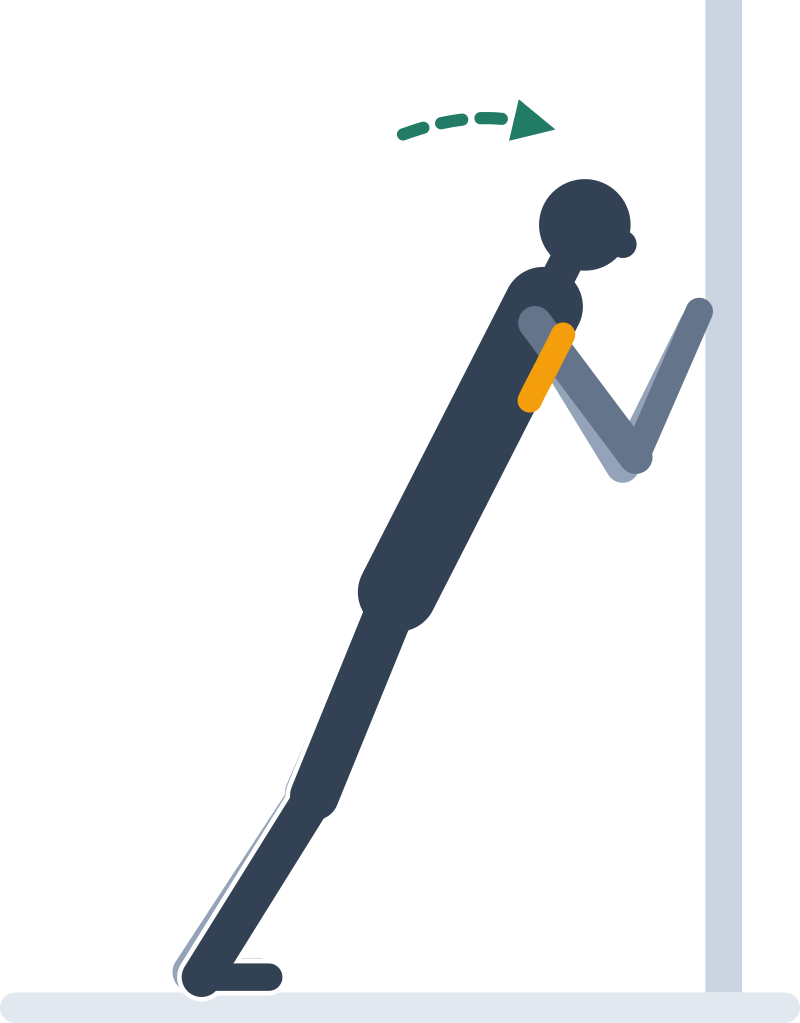
How to do it
- 1
Stand facing a wall, about an arm's length away. Place your hands flat on the wall at shoulder height, a little wider than your shoulders.
- 2
Step your feet back slightly so you lean towards the wall, with your body in a straight line from head to heels. Gently draw in your lower tummy.
- 3
Breathe in and bend your elbows to bring your chest towards the wall. Keep the elbows angled back at about 45 degrees, not flared out to the sides.
- 4
Stop when your nose is close to the wall, or sooner if that is enough.
- 5
Breathe out and push back to straight arms. Repeat.
How many
8 to 12 repetitions, 2 to 3 sets, 2 or 3 days a week. When 12 feel easy, make it harder rather than doing many more.
Common mistakes
Sagging at the hips or sticking the bottom out. Keep the body in one line.
Letting the head poke forward to reach the wall. The chest leads and the head stays in line.
Elbows flaring straight out to the sides, which strains the shoulders.
Hands too high or too low. Keep them at about shoulder height.
Rushing. A slow lowering builds more strength.
Make it easier
Stand closer to the wall, and bend the elbows only a little way.
Make it harder
Step further from the wall, then move on to a kitchen counter or a sturdy table, then to a floor push-up from the knees. A slow 3-second lowering also makes it harder.
Who it helps
When to stop and check
After breast cancer surgery, start only when your surgeon or physiotherapist allows pushing exercises, and check first if you have had a reconstruction or an implant placed under the chest muscle. Stop and get checked if the arm becomes more swollen, heavy or painful. If your wrists hurt, try pushing on your fists or holding the edge of a counter. Wear shoes that do not slip.
Are you doing it right? Book a form check
One live 1-hour video session with a Nuprana physiotherapist, for this exercise and any others you have been given. You can ask for a female physiotherapist, and we will match that request.
- Observe: they watch you do each exercise, from the angles that matter.
- Correct: they fix your position, range and speed as you go, so the right muscles do the work.
- Teach: you finish knowing how many to do, how it should feel, and when to make it harder.
Nothing to undress. Wear comfortable clothes you can move in; the camera only needs to see how you move.
₹649, from home, anywhere in India. If you are in pain or recovering from surgery, the physiotherapist will tell you what else would help.
Book a form checkFrequently asked questions
Are wall push-ups good for women over 50?
How many wall push-ups should I do?
Do wall push-ups help my bones?
Related
More strength and bone health exercises

Written by Dr. V. B. Rajendra Prasad, MPT. Licensed to practice in the US (NY state) and UK (HCPC).
20 years of clinical experience. About Dr. Rajendra