Heel Drops
Bones respond to impact: a quick jolt through the skeleton signals the bone to keep itself strong. Heel drops give that jolt in a simple, controlled way. You rise up on your toes and drop down onto your heels with a firm thud, holding a counter for balance. They are often used, alongside strength exercises and walking, to help maintain the bones of the hips after menopause.
Written by Dr. V. B. Rajendra Prasad, MPT, licensed in the US and UK.
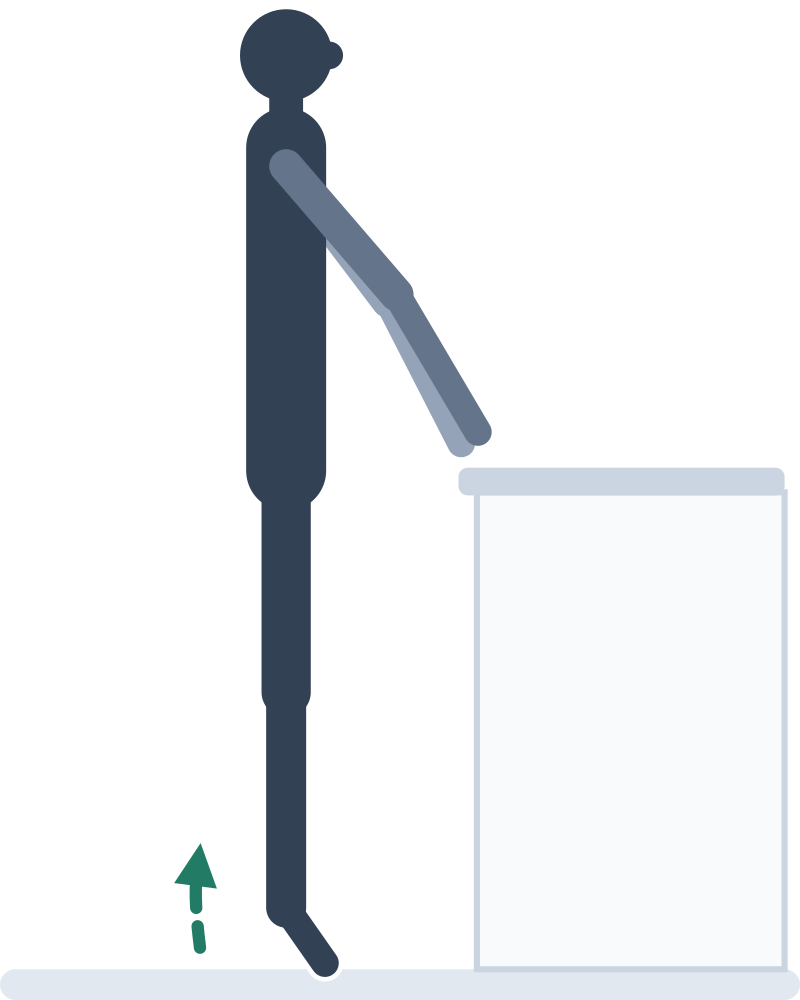
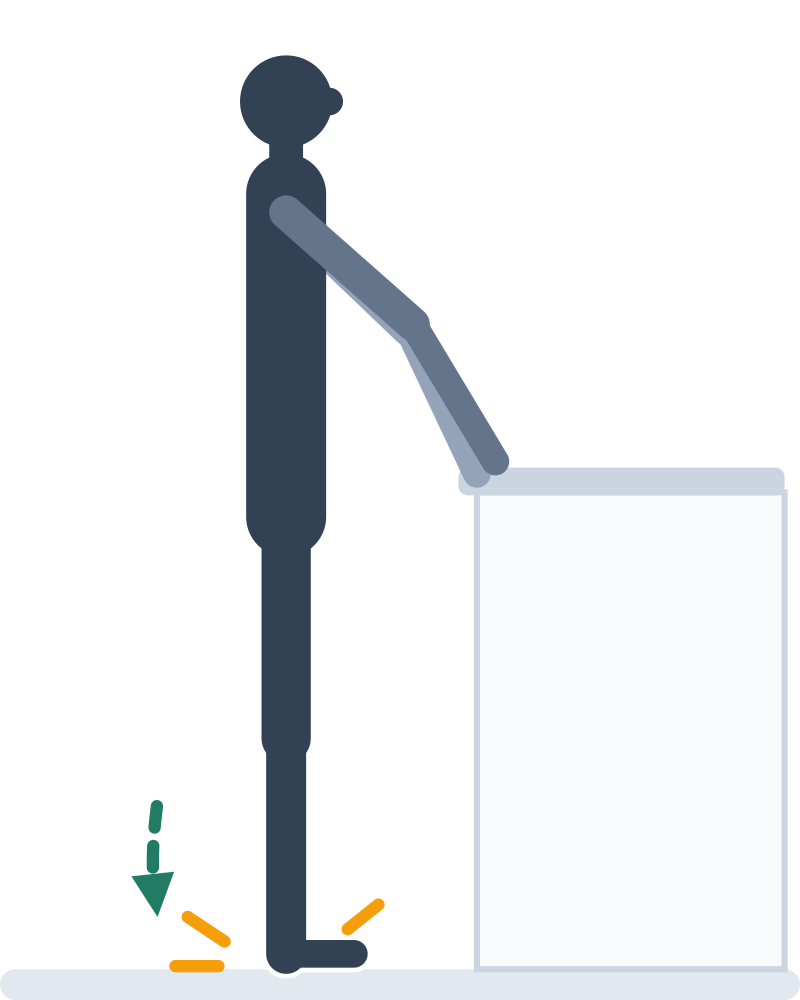
How to do it
- 1
Stand tall in flat, supportive shoes on a firm floor, holding a kitchen counter or the back of a sturdy chair.
- 2
Rise up onto your toes, as high as is comfortable.
- 3
Let your weight drop down onto your heels with a firm thud, keeping your knees soft rather than locked.
- 4
Stand still for a second or two, then repeat.
- 5
Do them in sets of 10, with a short rest between sets.
How many
Start with 10 to 20 drops a day. Over a few weeks, build up to about 50 a day, in sets of 10, on most days of the week.
Common mistakes
Lowering slowly. The benefit for bone comes from the brief jolt, so let the heels drop.
Locking the knees straight, which sends the jolt into the knees and back.
Doing them barefoot on a hard floor if it hurts the heels. Wear cushioned shoes.
Letting go of the support before your balance is good.
Starting with high numbers. Build up gradually so the joints can adapt.
Make it easier
Hold on with both hands, rise only a little way, and let the drop be gentle at first. Marching on the spot with a firm step is another way to start.
Make it harder
Hold on more lightly, or with one hand. If your physiotherapist agrees and your bones and joints allow, the next step is small hops or skips.
Who it helps
When to stop and check
Ask your doctor or physiotherapist before starting heel drops if you have had a fracture of the spine or hip, have been told your fracture risk is very high, have arthritis of the hip, knee or ankle that flares with impact, have heel pain or an Achilles problem, have poor balance, or have a prolapse or leaking that gets worse with impact. Stop if they cause pain in the back, hips, knees or heels.
Are you doing it right? Book a form check
One live 1-hour video session with a Nuprana physiotherapist, for this exercise and any others you have been given. You can ask for a female physiotherapist, and we will match that request.
- Observe: they watch you do each exercise, from the angles that matter.
- Correct: they fix your position, range and speed as you go, so the right muscles do the work.
- Teach: you finish knowing how many to do, how it should feel, and when to make it harder.
Nothing to undress. Wear comfortable clothes you can move in; the camera only needs to see how you move.
₹649, from home, anywhere in India. If you are in pain or recovering from surgery, the physiotherapist will tell you what else would help.
Book a form checkFrequently asked questions
Do heel drops really help bones?
How many heel drops should I do a day?
Who should not do heel drops?
Related
More strength and bone health exercises

Written by Dr. V. B. Rajendra Prasad, MPT. Licensed to practice in the US (NY state) and UK (HCPC).
20 years of clinical experience. About Dr. Rajendra