Resistance Band Row
The band row strengthens the muscles between the shoulder blades and at the back of the shoulders, which hold you upright. Strong upper back muscles help posture, support the spine when bones are thinner after menopause, and help the shoulder regain strength after breast cancer surgery. A resistance band costs little, and you can do the exercise sitting on a chair at home.
Written by Dr. V. B. Rajendra Prasad, MPT, licensed in the US and UK.
How to do it
- 1
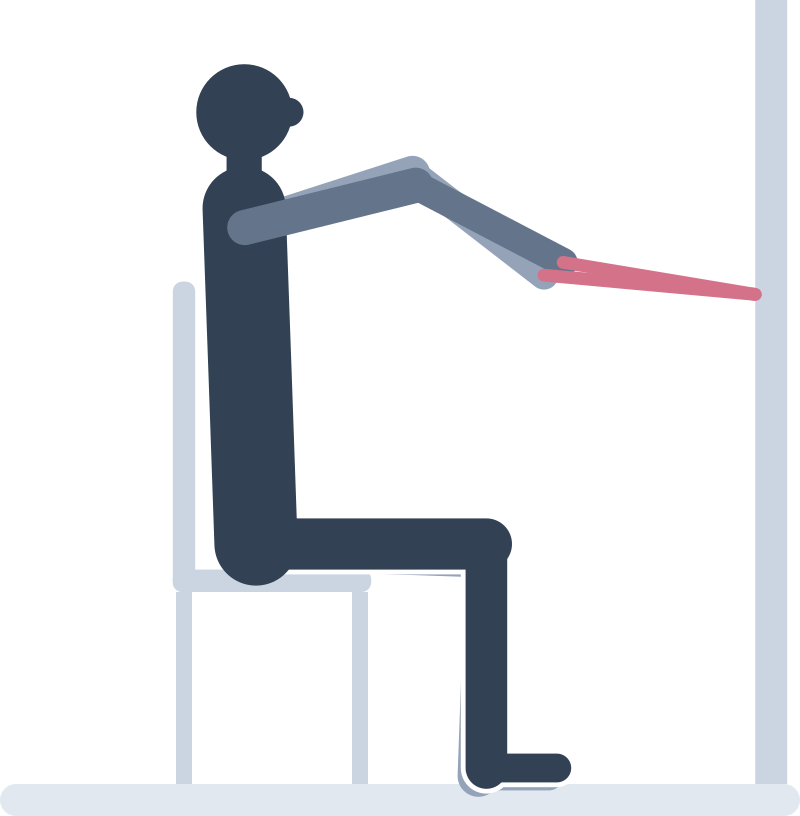
Tie a resistance band around a window grille, a firm post or a heavy table leg, at about chest height. Sit tall on a chair facing it, or stand with your feet hip-width apart.
- 2
Hold one end of the band in each hand, arms straight out in front, with a little tension in the band.
- 3
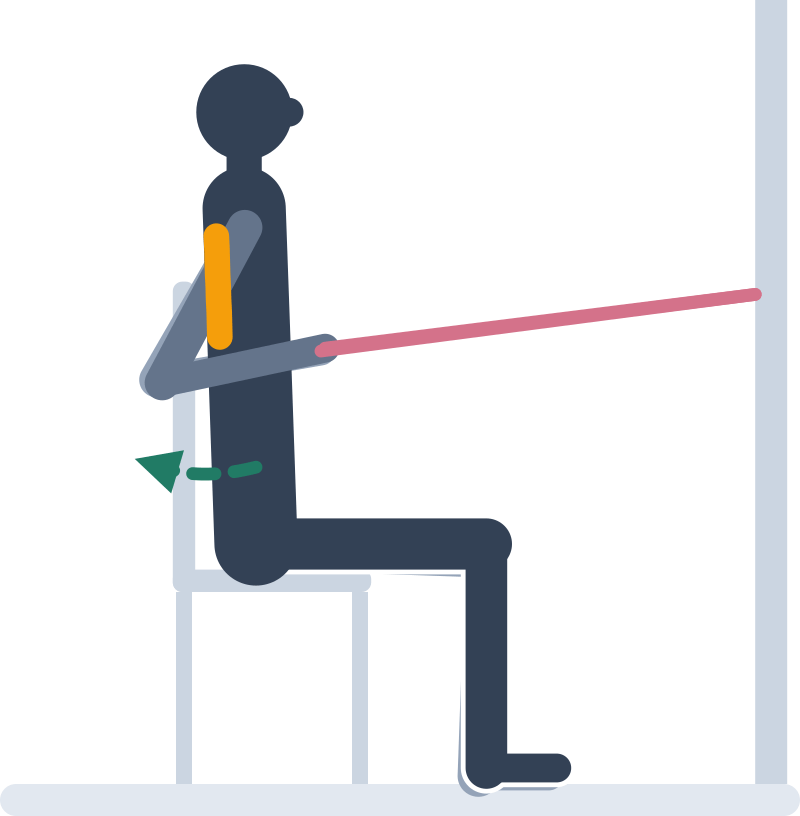
Breathe out and pull your elbows back past your sides, keeping them close to your body, and gently squeeze your shoulder blades together.
- 4
Keep your shoulders down away from your ears and your chest tall. Hold for 2 seconds.
- 5
Let your arms go slowly forward again, controlling the band. Repeat.
How many
8 to 12 repetitions, 2 to 3 sets, 2 or 3 days a week. Choose a band that makes the last 2 or 3 repetitions feel hard while your form stays good. After breast surgery, start with the lightest band and 1 set.
Common mistakes
Shrugging the shoulders up towards the ears. Keep them down and back.
Leaning back to pull. The body stays still; the arms and shoulder blades do the work.
Letting the band snap forward. Return slowly.
Flaring the elbows out wide. Keep them close to your sides.
Holding your breath. Breathe out as you pull.
Make it easier
Use a lighter band, sit a little closer to the anchor so there is less tension, or do shoulder blade squeezes without a band first.
Make it harder
Use a stronger band, move further back, pause for longer at the end, or add a set. Your physiotherapist may move you on to rows with weights.
Who it helps
When to stop and check
After breast cancer surgery, start only when your surgeon or physiotherapist allows resistance exercise, usually once the wound has healed, and build up slowly. Wear your compression sleeve during exercise if you have been given one. Stop and get checked if the arm or hand becomes more swollen, heavy, red or hot. With osteoporosis, sit or stand tall and do not round your back. Check the band for nicks and tears, and make sure the anchor is secure.
Are you doing it right? Book a form check
One live 1-hour video session with a Nuprana physiotherapist, for this exercise and any others you have been given. You can ask for a female physiotherapist, and we will match that request.
- Observe: they watch you do each exercise, from the angles that matter.
- Correct: they fix your position, range and speed as you go, so the right muscles do the work.
- Teach: you finish knowing how many to do, how it should feel, and when to make it harder.
Nothing to undress. Wear comfortable clothes you can move in; the camera only needs to see how you move.
₹649, from home, anywhere in India. If you are in pain or recovering from surgery, the physiotherapist will tell you what else would help.
Book a form checkFrequently asked questions
Is the band row safe with osteoporosis?
Can I do strength exercises after breast surgery or with lymphoedema?
Which resistance band should I buy?
Related
More strength and bone health exercises

Written by Dr. V. B. Rajendra Prasad, MPT. Licensed to practice in the US (NY state) and UK (HCPC).
20 years of clinical experience. About Dr. Rajendra