Wrist Extensor Stretch
The muscles that lift the wrist and fingers start at the outer side of the elbow. When they are overworked by typing, gripping, lifting a baby or playing badminton, the tendon there can become painful, which is known as tennis elbow. This stretch gently lengthens those forearm muscles and is often used alongside strengthening.
Written by Dr. V. B. Rajendra Prasad, MPT, licensed in the US and UK.
How to do it
- 1
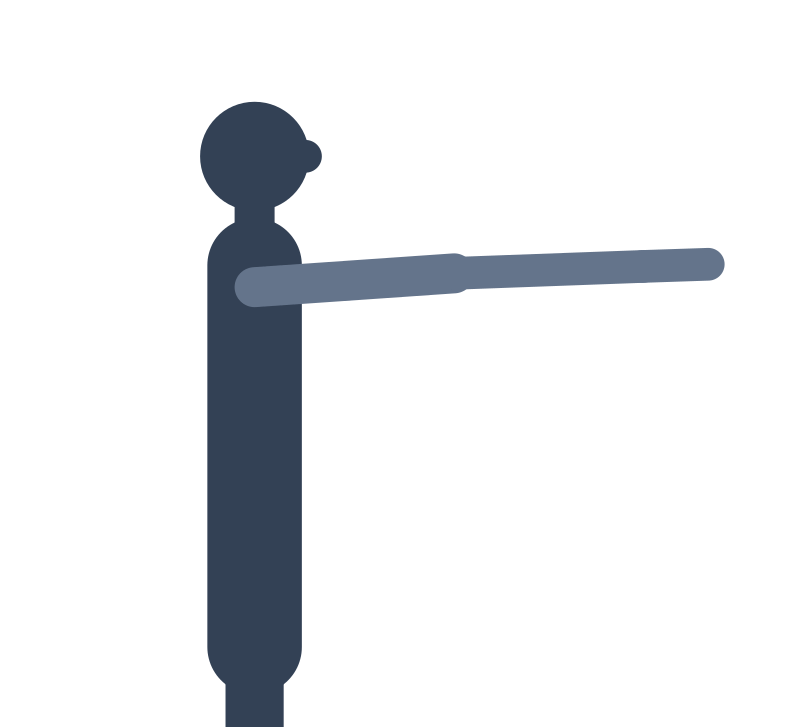
Stand or sit tall. Hold the arm out in front of you at shoulder height, elbow straight, palm facing down.
- 2
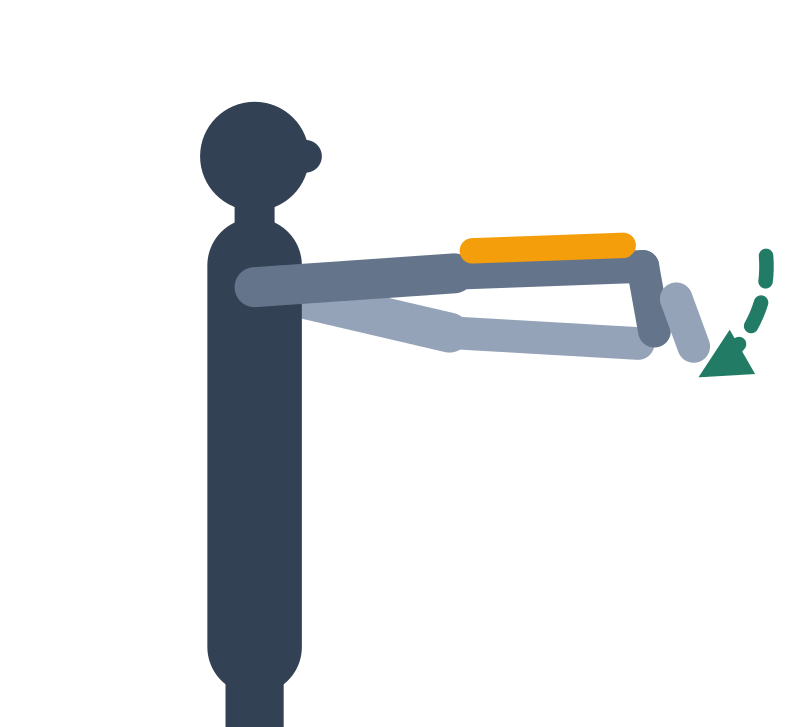
Let the wrist bend down so the fingers point towards the floor.
- 3
With the other hand, gently press on the back of the hand to bend the wrist a little further, until you feel a stretch along the top of the forearm.
- 4
Hold, breathing normally. Keep the elbow straight and the shoulder relaxed.
- 5
Release slowly. Repeat on the other side if needed.
How many
Hold for 20 to 30 seconds, 3 times, 2 to 3 times a day. During long typing sessions, a short stretch every hour helps.
Common mistakes
Bending the elbow. The stretch is much weaker with the elbow bent.
Pulling hard. A gentle stretch is enough, especially on a painful tendon.
Lifting the shoulder up towards the ear. Keep it down and relaxed.
Relying on stretching alone. Tennis elbow usually needs strengthening too.
Make it easier
Keep the elbow slightly bent, or rest the forearm on a table with the hand over the edge and let the wrist drop.
Make it harder
Curl the fingers into a loose fist before bending the wrist down, and turn the palm slightly outwards. Your physiotherapist will usually add strengthening, such as slow wrist lowering with a light weight.
Who it helps
When to stop and check
Stop if the stretch causes sharp pain at the elbow or wrist, or tingling into the fingers. Get checked if the elbow is swollen, the pain followed a fall, or you have numbness or weakness in the hand. After a wrist fracture, start stretching only when your doctor allows.
Are you doing it right? Book a form check
One live 1-hour video session with a Nuprana physiotherapist, for this exercise and any others you have been given.
- Observe: they watch you do each exercise, from the angles that matter.
- Correct: they fix your position, range and speed as you go, so the right muscles do the work.
- Teach: you finish knowing how many to do, how it should feel, and when to make it harder.
₹649, from home, anywhere in India. If you are in pain or recovering from surgery, the physiotherapist will tell you what else would help.
Book a form checkFrequently asked questions
Does stretching cure tennis elbow?
How long does tennis elbow take to get better?
Can I do this stretch at my desk?
Related

Written by Dr. V. B. Rajendra Prasad, MPT. Licensed to practice in the US (NY state) and UK (HCPC).
20 years of clinical experience. About Dr. Rajendra