Lifting and Carrying Your Baby
A new mother lifts her baby many times a day, often bending over a low bed, a cot or a mat on the floor, sometimes while still healing from a caesarean. Small changes in how you lift and carry protect the back, the wrists, the healing tummy and the pelvic floor. The same habits help fathers and grandparents too.
Written by Dr. V. B. Rajendra Prasad, MPT, licensed in the US and UK.
How to do it
- 1
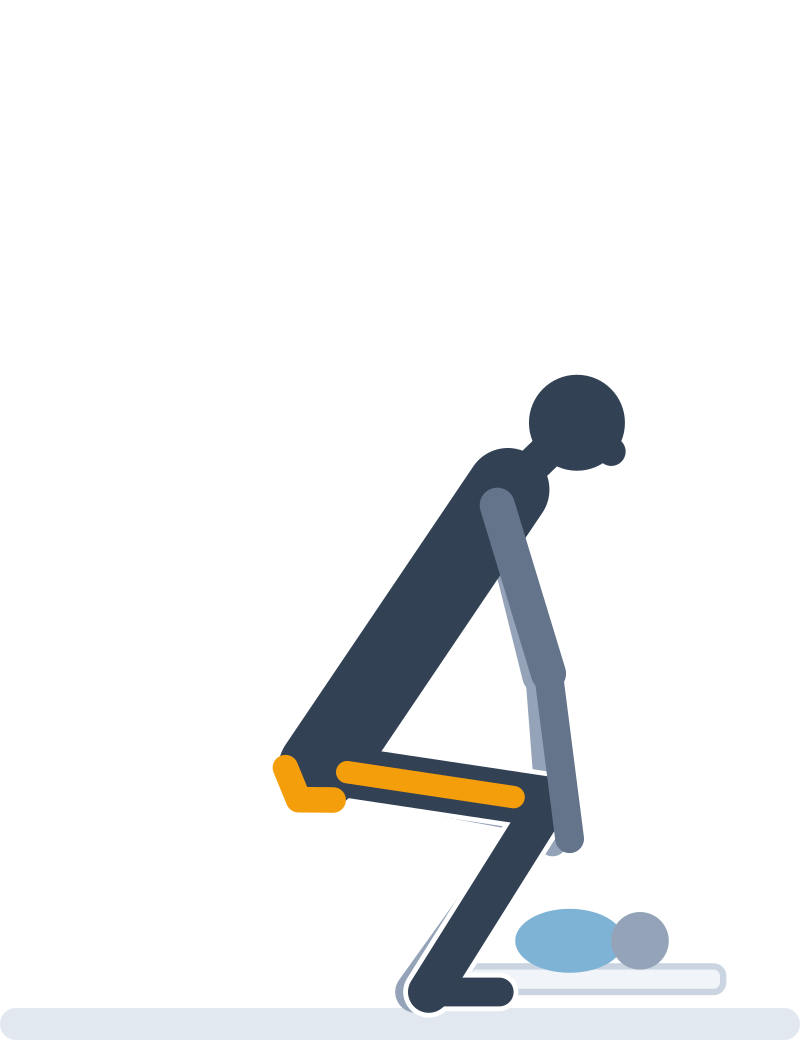
From the floor or a low bed: get down to the baby by bending your knees, or kneel on one knee beside them, instead of bending from the waist with straight legs.
- 2
Slide the baby close to you before lifting. Scoop them up with your palms facing up and your forearms under their body, rather than gripping under the arms with your thumbs spread wide.
- 3
Breathe out and gently lift your pelvic floor as you lift, and stand up using your legs, keeping your back long.
- 4
From a cot: stand close, lower the side if you can, bend your knees a little and bring the baby to the edge before lifting.
- 5
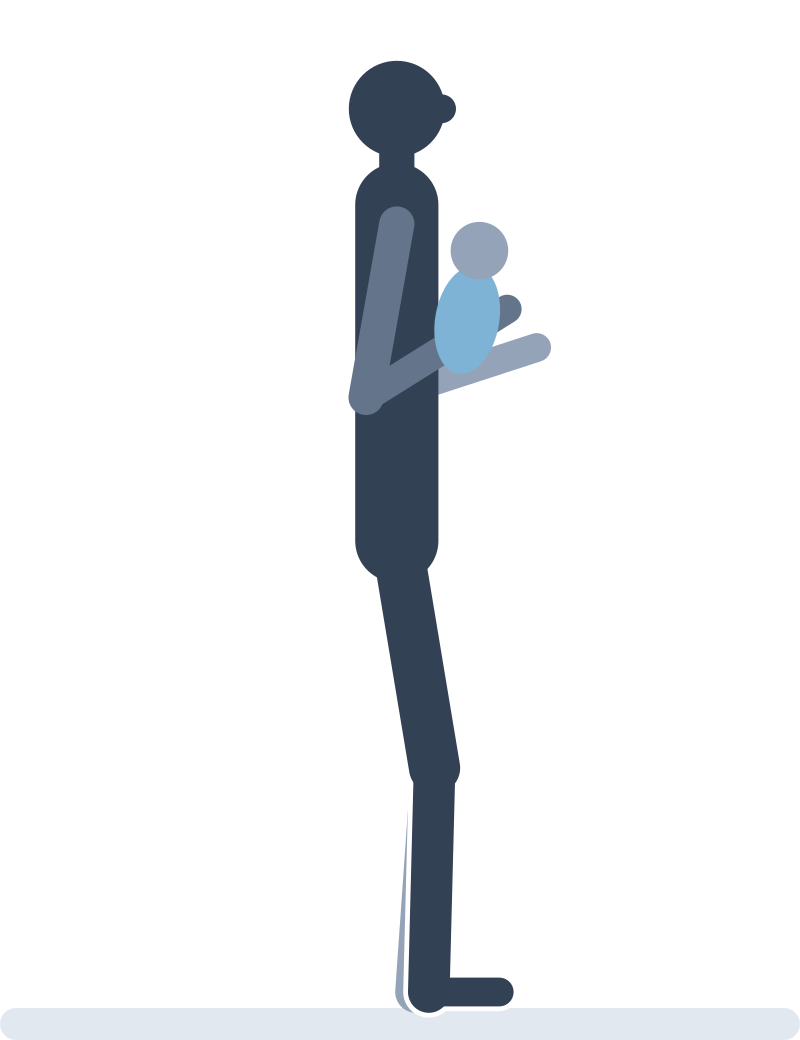
Carry the baby close to your chest, upright and centred, rather than on one jutting hip. Swap sides often, and use a well-fitting carrier that holds the baby high and close for longer walks.
How many
Use these steps every time you lift and carry. If you are unsure, practise the movement a few times without the baby first.
Common mistakes
Bending over from the waist with straight knees to reach a baby on a bed or mat.
Lifting with the baby held away from your body, or twisting as you lift.
Holding your breath and bearing down as you lift. Breathe out instead.
Lifting with the wrist bent back and the thumb stretched wide. This strains the thumb tendons and is a common cause of wrist pain in new mothers.
Always carrying on the same hip, with the hip pushed out to the side.
Make it easier
Change and feed the baby at a raised surface, such as a changing table, or sitting on the bed, so you bend less. In the first days after a caesarean, ask someone to pass you the baby, and use pillows to bring the baby up to you when feeding.
Make it harder
As you get stronger, use the same technique for heavier loads: a car seat, a bucket, shopping. Your physiotherapist will build in exercises such as sit-to-stand and squats so lifting gets easier.
Who it helps
When to stop and check
After a caesarean, avoid lifting anything heavier than your baby for about 6 weeks unless your doctor advises otherwise. If lifting brings on back pain that spreads down the leg, pain or tingling in the wrist or thumb that does not settle, or heaviness, a bulge or leaking from below, get checked by a physiotherapist.
Are you doing it right? Book a form check
One live 1-hour video session with a Nuprana physiotherapist, for this exercise and any others you have been given. You can ask for a female physiotherapist, and we will match that request.
- Observe: they watch you do each exercise, from the angles that matter.
- Correct: they fix your position, range and speed as you go, so the right muscles do the work.
- Teach: you finish knowing how many to do, how it should feel, and when to make it harder.
Nothing to undress. Wear comfortable clothes you can move in; the camera only needs to see how you move.
₹649, from home, anywhere in India. If you are in pain or recovering from surgery, the physiotherapist will tell you what else would help.
Book a form checkFrequently asked questions
How do I lift my baby after a C-section?
Why do my wrists hurt from lifting my baby?
Is it bad to carry my baby on my hip?
Related
More everyday movement exercises

Written by Dr. V. B. Rajendra Prasad, MPT. Licensed to practice in the US (NY state) and UK (HCPC).
20 years of clinical experience. About Dr. Rajendra